Akan-Fante in Ghana
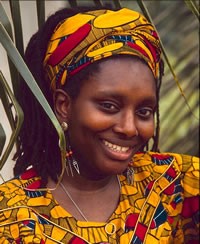
Photo Source:
COMIBAM / Sepal
|
Send Joshua Project a map of this people group.
|
| People Name: | Akan-Fante |
| Country: | Ghana |
| 10/40 Window: | No |
| Population: | 3,831,000 |
| World Population: | 3,863,000 |
| Primary Language: | Akan |
| Primary Religion: | Christianity |
| Christian Adherents: | 62.00 % |
| Evangelicals: | 33.70 % |
| Scripture: | Complete Bible |
| Ministry Resources: | Yes |
| Jesus Film: | Yes |
| Audio Recordings: | Yes |
| People Cluster: | Guinean |
| Affinity Bloc: | Sub-Saharan Peoples |
| Progress Level: |

|
Introduction / History
Along the central and western coast of Ghana, between the cities of Accra and Sekondi-Takoradi, live the Akan-Fante — one of the largest subgroups of the broader Akan people. Their heartland includes major coastal towns such as Cape Coast, Elmina, Saltpond, and Mankessim, the latter serving as their traditional spiritual capital. The Fante speak a dialect of Akan, a language belonging to the Kwa branch of the Niger-Congo family, and it remains the primary language of daily life and community identity.
Oral tradition holds that the Fante separated from other Akan groups around the thirteenth century, departing from what is now Techiman in the Brong-Ahafo region under three legendary warrior leaders — Obrumankoma, Odapagyan, and Oson, symbolized by the whale, the eagle, and the elephant. Their name, derived from "Fa-atsew," means "the half that left." After a long southward migration, they settled at Mankessim, where the first Omanhen, or king, was installed. Their coastal position made them natural middlemen between the interior of West Africa and the succession of European powers — Portuguese, Dutch, and British — who arrived from the fifteenth century onward. The Fante Confederacy, formalized in the eighteenth century, united their otherwise autonomous states in common defense, and the Bond of 1844, signed with the British, helped pave the way for Ghanaian independence a century later. The Fante have contributed prominently to Ghanaian public life, including figures such as Kofi Annan, former United Nations Secretary-General.
What Are Their Lives Like?
The Fante remain a people shaped by the sea. Fishing is still a defining livelihood along the coast, with knowledge of boats, tides, and nets passed down through families across generations. Inland communities cultivate crops including yams, cassava, cocoyams, plantain, and maize, while cocoa, palm oil, and timber serve as commercial agricultural products. Markets are a lively and economically vital part of community life, with women playing a central and longstanding role as traders and market organizers.
The Fante table reflects both coast and forest. Kenkey — fermented corn dough — is a staple, typically served with fresh fish, tilapia, or other seafood, along with pepper sauces and vegetables. Fufu, banku, and yam-based dishes also appear regularly. Fante cooks have over the centuries introduced dishes now eaten across Ghana, including a distinctive corned-beef stew and versions of Jollof rice.
Family structure follows a matrilineal pattern: clan membership and inheritance flow through the mother's line, though a husband and wife may maintain separate households even after marriage, which is common practice. Children belong to their mother's clan while simultaneously inheriting spiritual identity through their father's lineage. The Asafo, traditionally a military and civic organization for men of fighting age, continues to function in community life — appearing at funerals, festivals, and ceremonies, and serving as a form of grassroots political expression.
Festivals anchor the community calendar. The Oguaa Fetu Afahye, celebrated annually in Cape Coast, marks the beginning of the fishing season and includes processions, drumming, and dancing. It also carries the memory of a historic epidemic that once swept through the community, making cleanliness and collective health a ritual concern. The Bakatue festival similarly honors the sea and the blessing of its harvests. These events are occasions of reunion, cultural pride, and communal solidarity. Urban migration, especially among younger Fante, has drawn many to Accra and other economic centers, creating diaspora communities that maintain cultural ties back to the coast.
What Are Their Beliefs?
The majority of Akan-Fante today identify as Christians, and the Christian faith has deep roots in their coastal communities, shaped in part by generations of missionary presence in towns like Cape Coast and Elmina. Churches — both historic mainline denominations and newer charismatic and Pentecostal congregations — are prominent features of community life.
Yet traditional religious practice has not simply disappeared. Many Fante hold to a worldview centered on Nyame, the supreme creator God, alongside a range of lesser spiritual beings known as abosom, who are understood to function as intermediaries and are sought through shrines and priests called okomfo for protection, healing, and guidance. Ancestors, called nsamanfo, are venerated as ongoing spiritual presences watching over families and land, and are appealed to through libations and ritual offerings. Each lineage maintains a ceremonial stool believed to house the spirits of significant ancestors. These are not simply customs or cultural memories — they represent active spiritual trust placed in ancestral and natural forces. Mixing these practices with Christian confession is common, and the two do not always remain clearly separated in daily life. Salvation, however, is found only in Jesus Christ, who alone can break the power of spiritual bondage and bring true reconciliation with the living God.
What Are Their Needs?
Despite the Fante's long history of education and civic engagement, economic hardship remains a pressing reality in many coastal communities. Resource depletion in the fishing industry and limited employment for young people have deepened poverty in towns where household incomes fall below national medians. Access to quality healthcare and infrastructure continues to be uneven. Urban migration, while economically motivated, has created fractures in family life and cultural continuity, leaving some communities with an aging population and fewer hands for traditional livelihoods. Young Fante men and women need pathways to sustainable economic opportunity that do not require severing ties with their communities and identity.
Spiritually, the blending of Christian profession with the active veneration of ancestors and trust in lesser spiritual powers points to a need for deep discipleship — not simply church attendance, but a genuine encounter with the person and work of Jesus Christ that transforms belief at its root. The Fante church has both the heritage and the opportunity to be a force for that transformation, not only at home but far beyond Ghana's borders.
Prayer Points
Pray that Fante Muslims will have dreams of the risen and victorious Christ, leading them to put all their faith in Jesus.
Pray for economic renewal in coastal fishing communities, where depleted resources and youth unemployment create poverty and despair, and for believers to be instruments of practical hope.
Pray that the robust Christian presence among the Fante would stir a missionary vision — that Fante churches and individuals would actively join the global effort to carry the gospel to peoples who have never heard that Christ is the only Savior.
Pray for Fante youth navigating urbanization and cultural dislocation, that they would find their identity anchored in Christ rather than lost between worlds.