Binumarien in Papua New Guinea
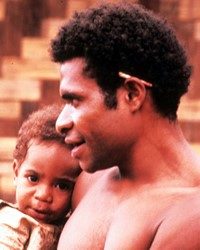
Photo Source:
Anonymous
|
Send Joshua Project a map of this people group.
|
| People Name: | Binumarien |
| Country: | Papua New Guinea |
| 10/40 Window: | No |
| Population: | 1,400 |
| World Population: | 1,400 |
| Primary Language: | Binumarien |
| Primary Religion: | Christianity |
| Christian Adherents: | 88.00 % |
| Evangelicals: | 15.00 % |
| Scripture: | New Testament |
| Ministry Resources: | Yes |
| Jesus Film: | No |
| Audio Recordings: | Yes |
| People Cluster: | New Guinea |
| Affinity Bloc: | Pacific Islanders |
| Progress Level: |

|
Introduction / History
The Binumarien are an ethnic group living in the Eastern Highlands Province of Papua New Guinea. They live in the mountainous interior, where steep valleys and fertile highland slopes have shaped their way of life for generations. They speak the Binumarien language, a member of the Trans–New Guinea language family, and maintain a distinct cultural identity tied closely to their ancestral land.
Historically, the Binumarien lived in tightly connected clan-based communities. Their villages were organized around extended family groups that worked together for farming, protection, and social stability. Leadership was traditionally exercised by respected men who demonstrated wisdom, skill in resolving disputes, and the ability to care for the needs of the community.
Contact with the outside world increased during the twentieth century through Australian administration, missionary outreach, and the spread of education. These influences brought Christianity, schools, and limited access to modern services. While these changes altered parts of daily life, the Binumarien have preserved many aspects of their cultural identity and social structure.
What Are Their Lives Like?
The Binumarien are agricultural people. Their daily life revolves around subsistence farming, with families growing sweet potatoes, taro, bananas, sugarcane, beans, and leafy vegetables. Sweet potatoes are the main staple food. Pigs are highly valued and are central to social life, ceremonial exchanges, and major celebrations.
Men are responsible for clearing gardens, constructing houses, fencing pig enclosures, and handling heavy labor. Women tend the gardens, prepare food, care for children, and gather firewood and water. Children begin contributing to family work at a young age and learn practical skills through daily participation.
Family life is built around the extended clan. Several related households often live close together, sharing responsibilities and supporting one another. Elders are highly respected for their wisdom and are entrusted with settling disputes and preserving community traditions.
Celebrations are an important part of Binumarien life. Weddings, funerals, reconciliation ceremonies, and church events often involve pig feasts, singing, dancing, and public exchanges of gifts. These gatherings strengthen social relationships and affirm both cultural and community identity.
What Are Their Beliefs?
The Binumarien are primarily Christians, with Protestant traditions being the dominant religious affiliation. Churches are central to village life and are regularly used for worship, teaching, and community gatherings.
Before the spread of Christianity, the Binumarien practiced traditional spiritual beliefs centered on ancestral influence and spiritual forces affecting daily life. Some of these beliefs continue to shape how people understand sickness, conflict, and hardship. Traditional explanations for misfortune may still influence certain families.
Christianity is well established among the Binumarien, and church attendance is common. However, not all who identify as Christian have a deep personal understanding of biblical truth. In some communities, traditional spiritual beliefs remain alongside Christian practice. The Binumarien need continued biblical discipleship and faithful teaching that clearly presents salvation through Jesus Christ and helps believers grow in spiritual maturity.
What Are Their Needs?
The Binumarien need improved healthcare access. Mountainous terrain makes travel to clinics difficult, and medical services are limited. Preventable illnesses and delayed treatment remain serious concerns.
Education is another significant need. While basic schooling is available in some areas, access to secondary education and advanced training is often limited. Greater educational opportunities would equip future leaders.
Economic opportunities are few, and most families rely entirely on subsistence farming. Improved roads and transportation would allow better access to markets, schools, and health services.
Spiritually, the Binumarien need strong local church leadership. Pastors and teachers need biblical training and resources. Believers also need encouragement to live out their faith clearly and to share the gospel with neighboring communities.
Prayer Points
Pray for better healthcare, roads, and educational opportunities for the Binumarien.
Pray for well-trained pastors and strong biblical teaching in local churches.
Pray for deep personal faith and spiritual maturity among believers.
Pray that Binumarien Christians will share the gospel with other communities.