Armenian in United States
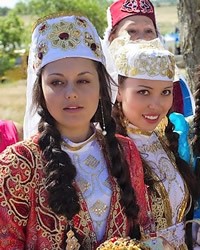
Photo Source:
Anonymous
|
Send Joshua Project a map of this people group.
|
| People Name: | Armenian |
| Country: | United States |
| 10/40 Window: | No |
| Population: | 251,000 |
| World Population: | 5,920,200 |
| Primary Language: | Armenian, Western |
| Primary Religion: | Christianity |
| Christian Adherents: | 94.00 % |
| Evangelicals: | 8.70 % |
| Scripture: | Complete Bible |
| Ministry Resources: | Yes |
| Jesus Film: | Yes |
| Audio Recordings: | Yes |
| People Cluster: | Armenian |
| Affinity Bloc: | Eurasian Peoples |
| Progress Level: |

|
Introduction / History
Throughout history, Armenia has been a battlefield for many invaders and contending empires and a bridge for many cultures and civilizations. During the past 2,700 years, Armenia has been conquered by the Persian Empire, Alexander the Great, the Roman Empire, the Byzantines, Arabs, Mongols, Tatars, Ottomans, Persians and Russians. Armenian kingdoms, principalities, and even a short-lived empire (95-55 B.C.) managed to survive and thrive for some 1,700 years. Under various kings and princes, the Armenians developed a sophisticated culture, original architecture, and their own alphabet.
The first recorded Armenian arrived in North America in 1618, when a man known as John Martin (Hovhannes Martikyan) settled in Jamestown, Virginia. Small numbers of Armenians continued to come during the 17th and 18th centuries, but these early arrivals were few and did not form large communities.
A more noticeable increase began in the mid-19th century, when Armenian students and others came to the United States through connections with American missionaries. The first major wave of Armenian immigration occurred in the late 1800s and early 1900s, as many fled persecution and violence in the Ottoman Empire, including the Hamidian massacres, the Adana massacre, and later the Armenian Genocide (1915–1918). Most reside in American urban centers in California, particularly in Los Angeles and Glendale, as well as in eastern cities like Boston and New York.
What Are Their Lives Like?
Daily life for Armenian Americans is generally shaped by the opportunities and freedoms of a highly developed society, including access to education, professional careers, and economic advancement. Many Armenians are engaged in business, skilled professions, and the arts, and they are often known for strong entrepreneurial activity and community involvement. At the same time, families typically place a high value on education, hard work, and upward mobility.
The Armenian Apostolic Church and other Armenian Christian traditions play an important role in maintaining identity, even though many individuals are influenced by the broader secular culture of American society. Churches often serve not only as places of worship but also as cultural centers that preserve the Armenian language, history, and traditions. However, while Christian identity is widely claimed, personal spiritual commitment can vary, and faith is sometimes more cultural than deeply practiced.
Family and community life remain central, with strong emphasis on preserving traditions through language, food, music, and celebrations. Armenian schools, cultural associations, and community events help younger generations stay connected to their heritage, even as they become fully integrated into American society. At the same time, assimilation presents ongoing challenges, particularly as later generations may lose fluency in the Armenian language and adopt more individualistic values.
Armenians in the United States also maintain a strong connection to global Armenian concerns, including the memory of the Armenian Genocide and support for Armenia and Armenian communities worldwide. This shared history fosters unity and advocacy within the diaspora.
Overall, life for Armenians in the United States is characterized by relative prosperity, cultural preservation within a diverse society, and the ongoing tension between maintaining ethnic identity and adapting to mainstream American life.
What Are Their Beliefs?
During the rule of King Dirtad III in 301, Armenia became the world's first Christian nation. A Christian monk, commonly known as Krikor Lusavorich or St. Gregory the Illuminator, cured the King of a disease. After this event, King Dirtad III was baptized and accepted Christianity as Armenia's official state religion. Before this, two disciples had brought Christianity to Armenia, St. Thaddeus and St. Bartholomew. The root of the tight Armenian community was due to the Armenian Apostolic Church in Astrakhan, established in 1717, playing a significant role in uniting the Armenians as a people.
Today, the Armenian Apostolic Church plays a central role in daily life, traditions, and national identity of ethnic Armenians. They are primarily cultural Christians, in danger of allowing faith in Christ to take second place to a form of Christianity wedded to ethnic identity. Every generation needs a fresh work of the Holy Spirit to move them to full devotion to Jesus Christ. There is also a strong movement to biblically based Christianity.
What Are Their Needs?
The traumatizing experience of being expelled from their homeland and the historic genocide made a deep impression on Armenians. Many have trouble forgiving the Turks even after over 100 years. This impedes their spiritual lives.
Prayer Points
Pray for a powerful revival for the Armenian Church, drawing them to a pure faith in the King of kings.
Pray that God would bring revelation of Christianity as a spiritual relationship rather than a call to nationalism.
Pray for Armenians to become vibrant witnesses of Christ's grace, mercy and power and for them to share Christ's spiritual answers.
References