Armenian in Iran
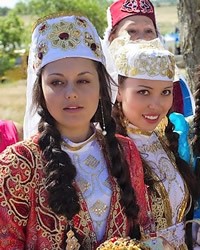
Photo Source:
Anonymous
|
Send Joshua Project a map of this people group.
|
| People Name: | Armenian |
| Country: | Iran |
| 10/40 Window: | Yes |
| Population: | 358,000 |
| World Population: | 5,920,200 |
| Primary Language: | Armenian |
| Primary Religion: | Christianity |
| Christian Adherents: | 94.00 % |
| Evangelicals: | 8.00 % |
| Scripture: | Complete Bible |
| Ministry Resources: | Yes |
| Jesus Film: | Yes |
| Audio Recordings: | Yes |
| People Cluster: | Armenian |
| Affinity Bloc: | Eurasian Peoples |
| Progress Level: |

|
Introduction / History
Throughout history, Armenia has been a battlefield for many invaders and contending empires and a bridge for many cultures and civilizations. During the past 2,700 years, Armenia has been conquered by the Persian Empire, Alexander the Great, the Roman Empire, the Byzantines, Arabs, Mongols, Tatars, Ottomans, Persians and Russians. Armenian kingdoms, principalities, and even a short-lived empire (95-55 B.C.) managed to survive and thrive for some 1,700 years. Under various kings and princes, the Armenians developed a sophisticated culture, original architecture, and their own alphabet.
The 1905 Russian Revolution and the 1908 Young Turk Revolution raised the hopes of the Armenians for reform and an opportunity to build a homeland in historical Armenia. These hopes were dashed as the Ottoman and Russian Empires fought each other during World War I.
A dark hour of Armenian history is the Armenian genocide, which started on April 24, 1915. Some 1,750,000 Armenians were deported into Syria and Mesopotamia by Ottoman authorities. Subject to famine, disease, and systematic massacres, most of them perished. This "ethnic cleansing" of the Armenians from their historical homeland led Raphael Lemkin, the father of the Genocide Treaty, to coin the new term "genocide" in the 1930s to describe the historical plight of the Assyrians and the Armenians as subjects of the first genocide of the 20th century.
During this time, thousands of Armenians fled eastward into Persia, especially into regions like Urmia and Tabriz, seeking refuge from massacres and deportations. Armenians had been well-established in Persia for hundreds of years, so that was a natural destination, especially for those who had relatives there.
What Are Their Lives Like?
Most Armenians reside in urban centers such as Tehran, Isfahan, and Tabriz, where they often have access to education, employment, and established community institutions.
Daily life for Armenian Iranians reflects a balance between integration and separation. Many are involved in skilled trades, business, and professional work, and they contribute meaningfully to the economy. However, some face restrictions in career advancement or government roles due to their religious identity. Economic pressures affecting the wider Iranian population, including inflation and limited opportunities, also impact Armenian families.
Family and community life are central, with strong emphasis on education, heritage, and maintaining close-knit relationships. Armenian schools and churches play a key role in shaping identity from a young age. Social life often revolves around church events, cultural celebrations, and family gatherings, reinforcing unity within the community.
Despite relative stability compared to some neighboring regions, many Armenians have emigrated over the years in search of greater economic opportunity and social freedom, contributing to a gradual decline in the population. Those who remain often demonstrate resilience, preserving their faith and traditions while living as a minority within a predominantly Muslim nation.
Armenians in Iran are officially recognized as a religious minority and are generally allowed to practice their Christian faith, particularly within the Armenian Apostolic Church. They operate their own churches, schools, and cultural organizations, which help preserve their language, traditions, and strong sense of identity. At the same time, their freedoms are somewhat limited compared to the Muslim majority, especially in areas such as evangelism and public religious expression.
What Are Their Beliefs?
During the rule of King Dirtad III in 301, Armenia became the world's first Christian nation. A Christian monk, commonly known as Krikor Lusavorich or St. Gregory the Illuminator, cured the King of a disease. After this event, King Dirtad III was baptized and accepted Christianity as Armenia's official state religion. Before this, two disciples had brought Christianity to Armenia, St. Thaddeus and St. Bartholomew. The root of the tight Armenian community was due to the Armenian Apostolic Church in Astrakhan, established in 1717, playing a significant role in uniting the Armenians as a people.
Today, the Armenian Apostolic Church plays a central role in daily life, traditions, and national identity of ethnic Armenians. They are primarily cultural Christians, in danger of allowing faith in Christ to take second place to a form of Christianity wedded to ethnic identity. Every generation needs a fresh work of the Holy Spirit to move them to full devotion to Jesus Christ.
In Iran, there is also a strong movement to biblically based Christianity. Armenian Christians have been instrumental in leading Muslims to a vibrant faith in Jesus Christ.
What Are Their Needs?
As a religious minority, Armenians in Iran are vulnerable to the Shia Muslim majority. The American attack on Iran in 2026 is viewed by some Muslims as an attack on Islam. This puts Christians in their country in a difficult situation. Armenians need protection.
Prayer Points
Pray for a powerful revival for the Armenian Church, drawing them to a pure faith in the King of kings.
Pray that God would bring revelation of Christianity as a spiritual relationship rather than a call to nationalism.
Pray for Armenians to become vibrant witnesses of Christ's grace, mercy and power and for them to share Christ's spiritual answers.
References