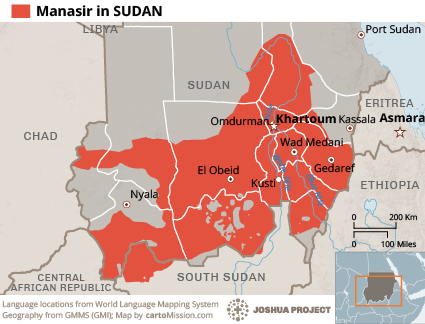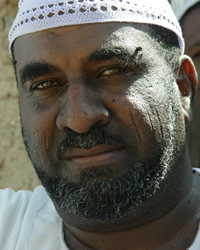

The Manasir are a Sudanese Arab people living primarily in northern Sudan along the Nile River and in the Bayuda Desert region. Their traditional homeland, known as Dar al-Manasir, was centered around the Fourth Cataract of the Nile before major changes came with the construction of the Merowe Dam. The Manasir are considered one of the riverine Arab tribes of northern Sudan, closely connected to neighboring groups such as the Rubatab and Shaigiya.
The Manasir identify themselves as Arabs, and oral traditions often trace their ancestry to migrants from the Arabian Peninsula. Historical and anthropological research, however, suggests the community developed through a blending of Arab migrants, indigenous Nubian peoples, and smaller tribal groups over many centuries. This mixture shaped a culture that is both Arab and deeply connected to the Nile Valley traditions of northern Sudan.
Historically, the Manasir lived in villages along the Nile where agriculture depended on seasonal flooding and fertile riverbanks. Others practiced seasonal nomadic life in the nearby desert. The completion of the Merowe Dam in 2009 dramatically affected many Manasir communities by flooding ancestral lands and forcing relocation. This displacement disrupted long-established village life, farming patterns, and cultural continuity for many families.
The Manasir speak Sudanese Arabic, though older studies noted traces of Nubian influence within their speech and culture. Tribal identity, clan relationships, oral poetry, and family lineage remain important aspects of Manasir social life.
The Manasir traditionally combine small-scale agriculture with pastoral and semi-nomadic lifestyles. Families living near the Nile cultivate dates, sorghum, millet, vegetables, and other crops on fertile alluvial soil. Date farming has historically been one of their most important economic activities, and the Manasir are well known in northern Sudan for their date cultivation.
Many Manasir also raise goats, sheep, and camels. Some families continue a seasonal Bedouin lifestyle in the Bayuda Desert, moving livestock through desert valleys during the rainy season while returning closer to the Nile at other times of the year. This dual river-and-desert existence has shaped much of their identity and daily life.
Village life is centered around extended family relationships and tribal loyalty. Hospitality, honor, and respect for elders are highly valued cultural traits. Homes are commonly built from mud brick, and the Manasir have traditionally been known for skill in constructing durable mud houses. Oral poetry, storytelling, and shared clan memory remain important parts of preserving identity and passing traditions from one generation to another.
The displacement caused by the Merowe Dam created major economic and social challenges for many families. Loss of farmland, relocation pressures, and changes in access to water and grazing land disrupted long-standing ways of life. Many communities continue to face economic hardship, limited infrastructure, and uncertain agricultural conditions.
The Manasir are Sunni Muslims, and Islam strongly shapes their personal, family, and community life. Religious practices commonly include daily prayer, fasting during Ramadan, mosque participation, and observance of Islamic customs connected to marriage, burial, and family celebrations. Islamic identity is deeply woven into Manasir culture and tribal tradition.
At the same time, traditional spiritual beliefs and folk practices continue to influence some aspects of life. Like many rural Muslim communities in Sudan, older beliefs involving spirits, blessings, curses, protective rituals, and supernatural influences may exist alongside formal Islamic practice. This blending of Islamic belief with older tribal traditions creates a syncretistic spiritual environment.
Most Manasir have had little meaningful exposure to biblical Christianity. Christianity may often be viewed as foreign or associated with outside cultures rather than understood through direct exposure to the gospel itself. They need to hear clearly that forgiveness of sins and reconciliation with God come through Jesus Christ alone rather than through religious identity, ritual observance, or tribal tradition.
The Manasir remain largely unreached with the gospel, and there are very few known believers among them. Long-term Christian ministry among Sudanese Arab tribes can be difficult because of strong Islamic identity, social pressure, political instability, and geographic challenges. Faithful Christian workers are needed who are willing to build relationships with humility, patience, and genuine compassion.
Practical needs are also significant. Many Manasir families continue to experience hardship connected to displacement, economic instability, limited educational opportunities, healthcare shortages, and environmental challenges in northern Sudan. Rural and semi-nomadic communities often face difficulties accessing consistent medical care, infrastructure, and stable employment opportunities.
The Manasir need Scripture resources, discipleship materials, and culturally understandable gospel teaching in Sudanese Arabic. Audio Scripture and oral Bible storytelling may be especially valuable in reaching both settled and semi-nomadic families. Any believers among them would need encouragement, biblical training, and fellowship support so they can grow strong in faith and eventually help reach their own people with the gospel.
Pray that the Manasir people will hear a clear presentation of the gospel and place their faith in Jesus Christ for salvation.
Pray that God will raise up faithful Christian workers who are willing to serve among the Manasir with wisdom, compassion, and perseverance.
Pray that the Manasir people will be adopted through the People Group Adoption program so that churches and believers will commit to sustained prayer and future gospel outreach among them.
Pray that any believers among the Manasir will grow strong in biblical truth and boldly share the hope of Christ with their families and tribal communities.
Scripture Prayers for the Manasir in Sudan.
https://en.wikipedia.org/wiki/Manasir
https://en.wikipedia.org/wiki/Rubatab_tribe
https://www.globalsecurity.org/military/world/sudan/tribes.htm
https://www.anasudani.net/english-7.html
https://link.springer.com/rwe/10.1007/0-387-29905-X_98
| Profile Source: Joshua Project |