


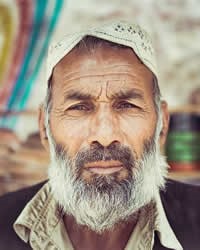

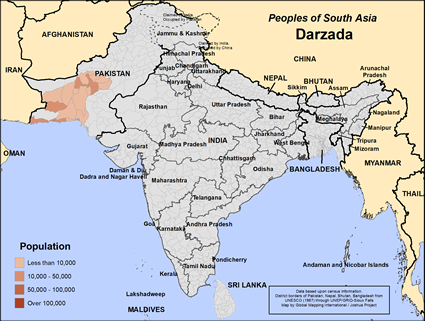
The Darzada are a Baloch community primarily found in the Makran region of Balochistan in southwestern Pakistan. Some Darzada families also live in nearby Sindh Province and in other parts of the Middle East due to migration over many generations. They speak Southern Balochi and are connected culturally to the broader Baloch peoples of the region.
The name "Darzada" has been understood to refer to someone who came from another place, reflecting older migration patterns and tribal movement within the Baloch world. Historically, the Darzada developed within the tribal and clan structures common throughout Balochistan, where loyalty to family, tribe, and local leadership shaped social life. The Makran coast has long served as a trade and migration corridor linking South Asia, the Arabian Peninsula, and Iran, exposing the Darzada to a mixture of cultural influences while preserving their Baloch identity.
The Darzada come from a variety of social and professional backgrounds. Some families are involved in agriculture, fishing, labor, trade, transportation, or small business activity, while others have become known in fields such as poetry, music, politics, and education. Baloch culture traditionally places high value on honor, hospitality, tribal loyalty, and respect for elders, and these values continue to influence Darzada family life today.
Many Darzada communities live in areas where economic opportunities are limited and infrastructure remains underdeveloped. Access to healthcare, clean water, education, and stable employment can be difficult in parts of Balochistan, especially in remote areas. Families often depend heavily on extended relatives and tribal connections for support during hardship.
Meals commonly include flatbreads, rice, meat, tea, and regional foods associated with Baloch culture. Social life is often centered around family gatherings, weddings, religious observances, poetry, and traditional storytelling. Younger generations increasingly encounter pressures from urbanization, migration, and modern media while trying to preserve their cultural heritage and identity.
The Darzada are overwhelmingly Sunni Muslim and generally follow Islamic traditions shaped by both religion and tribal culture. Religious life commonly includes prayer, observance of Islamic festivals, respect for the Qur'an, and participation in mosque life. In many communities, religious identity is closely tied to family and tribal belonging.
Alongside formal Islamic practice, some traditional customs and folk beliefs may also influence spiritual thinking. Fear of spiritual forces, reliance on blessings from religious figures, or practices tied to local customs can remain present in parts of Baloch society. Like many Muslim communities with limited gospel exposure, the Darzada may pass through life with little or no meaningful contact with a biblical Christian witness.
Those who come to faith in Jesus Christ may face strong pressure from family and tribe, including rejection or persecution. Believers need careful discipleship, biblical teaching, and strong fellowship so their faith becomes firmly grounded in Scripture.
The Darzada need greater access to the gospel through faithful Christian witness, Scripture, and long-term discipleship rooted clearly in the Word of God. Many have little understanding of the biblical message of salvation through Jesus Christ alone and need opportunities to encounter the gospel through trusted relationships and compassionate ministry.
Practical needs are also significant in many Darzada communities. Economic instability, limited educational opportunities, healthcare challenges, and geographic isolation affect daily life for many families in Balochistan. Ongoing unrest and social pressures in the region can also contribute to uncertainty and hardship.
Believers from Darzada backgrounds need spiritually mature leadership, biblical training, and healthy local fellowship. Christian workers serving among the Darzada must demonstrate humility, patience, courage, and genuine love while building long-term relationships within a culturally conservative environment.
Pray that the Darzada people would hear the gospel clearly and come to understand that forgiveness of sins is found only through Jesus Christ.
Pray that the Holy Spirit would open hearts throughout the Makran region and raise up faithful believers who will share biblical truth with the Darzada people.
Pray that the Darzada would be adopted through the People Group Adoption program so that sustained prayer, discipleship, and future gospel engagement would continue among them.
Pray that believers from Darzada backgrounds would grow strong in Scripture, remain faithful under pressure, and become courageous witnesses among the Baloch peoples of Pakistan.
Scripture Prayers for the Darzada in Pakistan.
https://en.wikipedia.org/wiki/List_of_Baloch_tribes
https://www.britannica.com/place/Balochistan-region-Asia
https://www.ethnologue.com/
https://en.wikipedia.org/wiki/Jadgal_people
| Profile Source: Joshua Project |



