


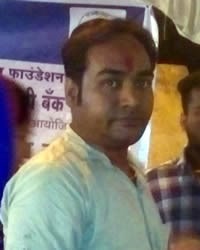

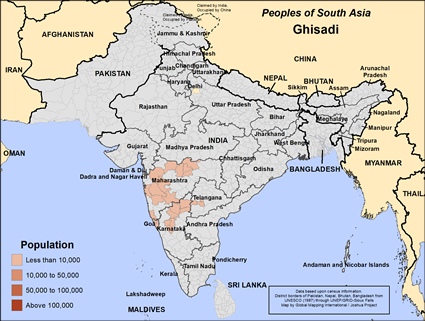
The Ghisadi people are found mainly in the western and central Indian states of Maharashtra, Karnataka, Telangana, Madhya Pradesh, and parts of Rajasthan. They are traditionally associated with metalworking occupations, especially blacksmithing, tool making, and repairing agricultural equipment. The community is also known by related names such as Ghisari, Gadi Lohar, or Rajput Lohar in some regions. Their primary languages vary by location and may include Marathi, Hindi, Kannada, Telugu, or regional dialects.
Historically, many Ghisadi families lived semi-nomadic lives, traveling from village to village repairing farming tools, making household metal goods, and providing blacksmith services to rural communities. Some traditions within the community connect their ancestry to Rajput groups that migrated after periods of political conflict in northern India. Over generations, economic and social changes led many families to settle permanently in villages and towns, though some still maintain mobile lifestyles connected to seasonal labor and trade.
The Ghisadi have preserved a strong sense of community identity through family ties, marriage customs, occupational traditions, and regional cultural practices. Their history reflects resilience and adaptation in the face of economic hardship and social marginalization.
Many Ghisadi families continue to work in metal-related trades, construction, agricultural labor, transportation, or small-scale business activities. Traditional blacksmith work still exists in some areas, especially where farming communities rely on locally repaired tools and equipment. Others have moved into urban labor markets seeking more stable income and employment opportunities.
Family life is generally centered around close-knit relationships and strong respect for elders. Extended families often live near one another or maintain regular contact even after migration for work. Marriages are commonly arranged within the community, and social life often revolves around festivals, weddings, and religious celebrations.
Meals typically include millet or wheat breads, rice, lentils, vegetables, and locally available foods common to their region. In poorer settlements, families may face overcrowded housing, irregular income, and limited access to quality education or healthcare. Even so, community solidarity and cultural traditions remain important parts of daily life among the Ghisadi.
The Ghisadi are primarily Hindu and follow religious traditions common throughout western and central India. Religious life often includes devotion to Hindu gods and goddesses, temple worship, participation in festivals, and ceremonies connected to family events and seasonal observances.
Many Ghisadi families also retain folk religious customs involving local deities, ancestral reverence, protective rituals, vows, and ceremonies intended to bring blessing, healing, or protection from misfortune. In some communities, spiritual practices connected to folk Hinduism and animistic traditions remain influential alongside mainstream Hindu worship.
Very few Ghisadi have had a clear opportunity to hear the gospel explained from the Bible. Many have little exposure to faithful Christian teaching or long-term Christian witness within their own cultural and linguistic setting.
The Ghisadi people face both practical and spiritual challenges. Many families struggle with poverty, unstable employment, limited educational opportunities, poor sanitation, and inadequate healthcare access. Communities connected to traditional trades may face increasing economic uncertainty as industrial manufacturing and modernization reduce demand for older occupations.
Spiritually, the Ghisadi remain largely unreached with the gospel. There is a need for committed Christian workers willing to live among them, build genuine relationships, and share biblical truth with humility and compassion. Scripture access, discipleship, and strong local churches are needed so that those who come to faith can grow spiritually and reach others within their community.
Practical ministries involving vocational support, literacy, healthcare assistance, education, and family encouragement may also help address real-life needs while opening doors for long-term gospel ministry among the Ghisadi people.
Pray that the Ghisadi people would hear the gospel clearly and come to faith in Jesus Christ as Lord and Savior.
Pray for Christian workers to serve faithfully among the Ghisadi with wisdom, humility, perseverance, and genuine compassion.
Pray that the Ghisadi people would be adopted through the People Group Adoption program so that ongoing prayer, outreach, discipleship, and future gospel engagement would continue among them.
Pray that believers in western and central India would boldly share biblical truth with the Ghisadi and demonstrate the love of Christ through practical service and godly lives.
Scripture Prayers for the Ghisadi in India.
https://en.wikipedia.org/wiki/Gadiya_Lohar
https://www.peoplegroups.org/explore/GroupDetails.aspx?peid=45641
https://censusindia.gov.in
https://www.britannica.com/topic/Hinduism
| Profile Source: Joshua Project |



