




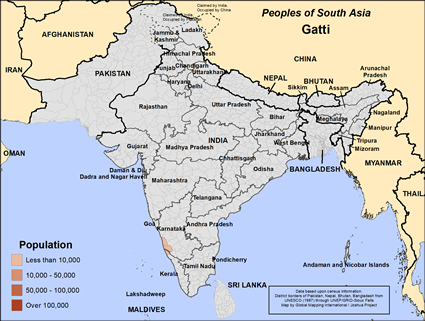
The Gatti are a small agricultural community found primarily near Kumbla and Someswara in the coastal region of Karnataka in southern India. They are also known by the names Poladava and Holadava, expressions that refer to "men of the field," reflecting their long association with farming and cultivation. Their primary language is Tulu, a Dravidian language widely spoken along the southwestern coast of India.
Historically, the Gatti community has been connected to the broader social structure of coastal Karnataka, where caste identity, temple worship, and clan relationships have shaped village life for generations. Traditional customs among the Gatti resemble those of several neighboring coastal groups, especially in matters of inheritance, social organization, and ceremonial observances. Though small in number, they maintain a distinct community identity tied closely to family networks, agriculture, and regional religious traditions.
The Gatti have traditionally lived as cultivators in rural communities along the coastal belt of Karnataka. Farming has long been central to their livelihood, and village life often revolves around seasonal agricultural rhythms, extended family responsibilities, and local religious festivals. Coconut, rice, and other regional crops are commonly grown throughout this coastal region, and many families remain connected to the land in some capacity.
The community follows a matrilineal inheritance pattern in which property and family lineage are traced through the female line. Their society is organized into exogamous clan divisions, meaning marriage takes place outside one's own clan group. Community leadership has historically been guided by recognized local leaders who help oversee social matters and customs.
Ceremonial life is important among the Gatti. Traditional death observances may include the construction of symbolic car-like structures when an honored person dies, reflecting the value placed on social standing and community memory. Meals and social interaction with neighboring communities occur in some settings, though marriage boundaries are traditionally maintained. Family loyalty, respect for elders, and community reputation continue to hold significant influence within their culture.
The Gatti are primarily Hindu and maintain strong ties to local temple worship and caste-based religious obligations. The deity associated with the Someswara temple is regarded as their caste deity, and families traditionally participate in temple observances connected to that shrine. Religious identity is closely intertwined with family heritage and community belonging.
Like many traditional Hindu communities in coastal India, religious practice among the Gatti combines devotion to Hindu deities with localized customs, ancestral traditions, and ritual obligations tied to community identity. Social exclusion has historically been connected to failure to participate in certain caste religious responsibilities, demonstrating how spiritual and social life are deeply connected within the community.
Although there are some Christians in the broader region, many Gatti still have little understanding of the gospel message or of salvation through Jesus Christ alone. Traditional beliefs, community pressure, and inherited religious customs remain strong influences.
The Gatti need faithful gospel witness presented in ways that are understandable within their cultural and linguistic setting. Many still live within a tightly connected religious and social structure where following Christ may bring family pressure or social isolation. They need access to Scripture, discipleship, and mature local believers who can clearly explain the message of salvation through Jesus Christ.
There is also a need for ongoing ministry among rural families who may have limited access to healthcare, educational opportunities, and economic advancement. Compassionate Christian service, combined with long-term relationship building, can help open doors for meaningful gospel engagement.
The Gatti would benefit from trained Christian workers who are willing to live among them, learn their language and customs, and help establish strong local fellowships centered on biblical truth. Continued prayer and intentional outreach are needed so future generations may hear the gospel clearly.
Pray that the Gatti people will hear a clear presentation of the gospel and understand that salvation comes through Jesus Christ alone.
Pray that God will raise up faithful believers and church planters who are willing to serve among the Gatti with humility, wisdom, and perseverance.
Pray that the Gatti people will be adopted through the People Group Adoption program so that sustained prayer, outreach, and gospel engagement will continue until strong biblical churches are established among them.
Pray that any existing Christians in the region will grow strong in their faith and boldly share the message of Christ with neighboring communities and unreached peoples.
Scripture Prayers for the Gatti in India.
https://peoplegroups.org/people_groups/pg049203/
https://en.wikisource.org/wiki/Castes_and_Tribes_of_Southern_India/Gatti
https://www.hinduamerican.org/caste-reporters-guide/
https://www.britannica.com/place/India/Caste
| Profile Source: Joshua Project |



