




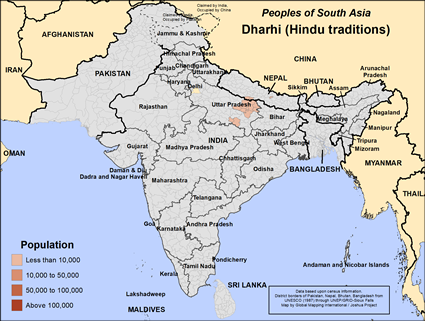
The Dharhi people of India are traditionally connected with musical performance, praise singing, storytelling, and oral traditions that have long been part of village and regional culture. They are found primarily in northern India, especially in Punjab and neighboring areas. The Dharhi community has historically served as singers, genealogists, musicians, and keepers of local traditions, often performing during festivals, family celebrations, and community gatherings. Their language is generally Punjabi or related regional dialects depending on where they live.
Over many generations, the Dharhi developed a recognized social role within local society through music and oral performance. Some groups became known for preserving heroic stories, historical accounts, and religious songs passed down through generations. Modern economic changes, urbanization, and declining dependence on traditional occupations have affected many Dharhi families, leading some into wage labor, transportation work, small business, or other forms of employment outside their historic profession.
Though aspects of traditional Dharhi culture remain strong, younger generations increasingly balance inherited customs with the pressures of modern Indian society. Their identity continues to be shaped by family heritage, regional traditions, and longstanding community ties.
Many Dharhi families live in villages or smaller towns, though some have migrated into larger cities seeking stable work and education. Family life is generally close-knit, with strong respect for elders and extended family relationships. Marriage customs, festivals, and community gatherings remain important parts of social life.
Music and oral performance still influence the identity of many Dharhi families even when it is no longer their primary source of income. Community celebrations may include traditional songs, storytelling, instruments, and performances connected to weddings or cultural events. Daily life varies widely depending on economic conditions. Some families work in agriculture, transportation, trade, construction, or small businesses, while others continue involvement in entertainment or ceremonial roles.
Meals commonly include wheat breads, rice, lentils, vegetables, yogurt, and regional Punjabi foods. In rural areas, life often revolves around seasonal work, religious observances, and maintaining family responsibilities. Access to education and economic opportunity has improved for some families, but others still face financial hardship and limited advancement opportunities.
The Dharhi identified with Hindu traditions generally follow popular forms of Hindu worship mixed with local customs and family-based religious practices. Religious life may include devotion to Hindu gods and goddesses, observance of holy days, temple visits, household rituals, and participation in regional festivals.
In many cases, religious practices are deeply connected to tradition, ancestry, and community identity rather than formal theological understanding. Folk beliefs, superstitions, ritual observances, and reverence for local spiritual figures may also influence daily life. Some families combine mainstream Hindu practices with local customs tied to protection, blessing, healing, or prosperity.
Very few Dharhi have a clear understanding of the gospel message. Many have had little exposure to biblical Christianity or sustained Christian witness within their own cultural and linguistic setting.
The Dharhi people have both practical and spiritual needs. Economic instability, inconsistent employment, educational limitations, and social pressures affect many families, especially those whose traditional occupations no longer provide reliable income. Younger generations often face uncertainty as cultural changes reshape community life and employment opportunities.
Spiritually, the Dharhi need access to the gospel in ways that are understandable and culturally meaningful. There is a need for mature believers willing to invest in long-term relationships, discipleship, Scripture translation efforts where needed, and compassionate ministry that reflects the love and truth of Christ.
Christian workers serving among the Dharhi can also help address practical concerns through education support, vocational assistance, literacy efforts, and family encouragement. Local believers in surrounding areas need courage and wisdom to faithfully share the gospel with the Dharhi community.
Pray that the Dharhi people would hear the gospel clearly and respond in faith to Jesus Christ.
Pray for Christian workers to build genuine relationships among the Dharhi and serve them with humility, compassion, and biblical truth.
Pray that the Dharhi people would be adopted through the People Group Adoption program so that ongoing prayer, outreach, discipleship, and future gospel engagement would continue among them.
Pray that believers in northern India would grow in boldness and faithfully share the message of Christ with the Dharhi and neighboring communities.
Scripture Prayers for the Dharhi (Hindu traditions) in India.
https://en.wikipedia.org/wiki/Dhadhi
https://www.britannica.com/topic/Hinduism
https://censusindia.gov.in
https://www.peoplegroups.org/explore/GroupDetails.aspx?peid=45487
| Profile Source: Joshua Project |



