




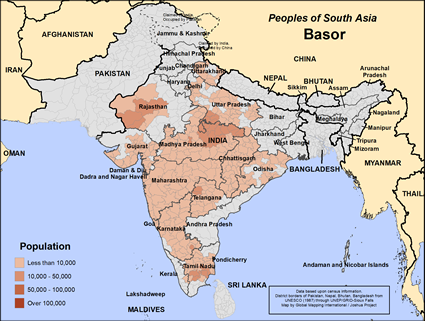
The Basor are a traditional community found in several regions of northern and central India, including Madhya Pradesh, Uttar Pradesh, Chhattisgarh, and neighboring states. Historically, they have been associated with bamboo work, basket weaving, mat making, and the crafting of household utility items from forest materials. Their name is often connected to bamboo craftsmanship, which for generations provided both livelihood and social identity within village economies.
Many Basor families traditionally lived on the edges of villages and supplied practical goods used in agriculture, storage, transportation, and daily household life. As industrially manufactured products became more common, traditional bamboo occupations declined in many places, forcing numerous Basor families into agricultural labor, construction work, sanitation jobs, or other forms of low-income employment. Despite economic changes, some communities still preserve traditional weaving skills and local craftsmanship passed down through family lines.
The Basor commonly speak Hindi or regional dialects depending on their location. Their social identity has historically been shaped by caste structures that often placed them among marginalized communities with limited access to education, land ownership, and economic advancement. Though modernization has brought gradual change, many Basor communities continue to experience poverty and social discrimination.
Many Basor families live in rural villages or crowded urban settlements where economic opportunities are often unstable. Bamboo weaving and basket making still exist in some areas, especially where local markets continue to value handmade goods, but many now depend on wage labor, farming work, factory jobs, transportation work, or seasonal migration for survival. Income can fluctuate greatly depending on local demand and employment availability.
Family life is usually centered on close community relationships and mutual support among relatives. Extended families often live near one another, and marriages are commonly arranged within the broader community. Festivals, weddings, village gatherings, and religious celebrations remain important social events. Traditional foods vary by region but commonly include rice, wheat bread, lentils, vegetables, and locally available foods.
Educational opportunities have improved in some places, especially for younger generations, yet many families still struggle with limited schooling, child labor pressures, poor housing conditions, and inadequate healthcare access. Urban migration has exposed some Basor families to modern lifestyles and technology, but many continue to live with financial insecurity and social exclusion.
The Basor are primarily Hindu and often combine mainstream Hindu practices with folk religion and traditional spiritual beliefs. Worship may include devotion to regional Hindu gods and goddesses along with village deities believed to protect families, crops, livestock, and health. Religious festivals, offerings, rituals, and ceremonies connected to life events remain central parts of community life.
In many areas, animistic beliefs and fear of spiritual forces strongly influence daily living. Some families consult local spiritual healers, priests, or ritual specialists during sickness, hardship, or suspected spiritual oppression. Beliefs involving curses, spirits, ancestor influences, and ritual protection may exist alongside formal Hindu worship. This blending of folk religion with Hindu tradition creates a deeply syncretistic spiritual environment.
Most Basor have had little opportunity to hear a clear presentation of the gospel. They need to know that freedom from sin, fear, and spiritual bondage comes through Jesus Christ alone and not through rituals, offerings, or inherited religious traditions.
The Basor need faithful gospel witness presented with humility, compassion, and long-term commitment. In many communities there are few strong churches nearby and limited access to biblical teaching in forms that are understandable and culturally meaningful. Social pressures and fear of rejection can discourage those who show interest in Christianity.
Practical needs are also significant. Many Basor communities face chronic poverty, unstable employment, poor sanitation, inadequate housing, limited healthcare access, and educational barriers. Economic hardship can make families vulnerable to exploitation and cycles of generational poverty.
There is a need for Christian workers who are willing to serve both spiritually and practically through discipleship, literacy efforts, vocational assistance, medical outreach, and compassionate community involvement. Local believers need biblical training and encouragement so they can grow strong in faith and reach their own people with the gospel.
Pray that the Basor people will hear the gospel clearly and come to understand the salvation offered through Jesus Christ alone.
Pray that God will raise up compassionate Christian workers who are willing to live among the Basor and faithfully share biblical truth with love and humility.
Pray that the Basor people will be adopted through the People Group Adoption program so that churches and believers will commit to ongoing prayer and future gospel outreach among them.
Pray that any believers among the Basor will grow in spiritual maturity, remain faithful under pressure, and boldly share Christ within their families and communities.
Scripture Prayers for the Basor in India.
https://en.wikipedia.org/wiki/Basor
https://en.wikipedia.org/wiki/Bamboo_and_cane_crafts_of_India
https://en.wikipedia.org/wiki/Caste_system_in_India
| Profile Source: Joshua Project |



