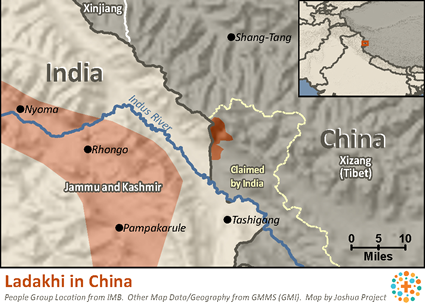

The Ladakhi are a Tibetic people group traditionally associated with the high mountain regions of Ladakh in the western Himalayas. While most Ladakhi live in India, a smaller population also lives in western China near the Tibetan cultural regions. The Ladakhi language belongs to the Tibetic branch of the Sino-Tibetan language family and is closely related to Tibetan. Their culture has been shaped by centuries of life along ancient trade routes connecting Tibet, Central Asia, Kashmir, and western China.
Historically, Ladakh served as an important crossroads for traders, pilgrims, and travelers moving between Tibet, Xinjiang, and South Asia. The Ladakhi people developed a distinct Himalayan culture influenced by Tibetan Buddhism, mountain pastoral life, and interaction with neighboring peoples. In the Chinese context, Ladakhi communities are generally connected culturally to Tibetan populations living in western China and the broader Tibetan plateau.
Life in the Himalayan region has traditionally required resilience and close community cooperation because of the harsh climate, high altitude, and geographic isolation. These conditions helped preserve Ladakhi language, customs, and religious identity over many generations.
The Ladakhi traditionally live in mountainous valleys and high-altitude settlements where agriculture and livestock care are central to daily life. Families commonly raise yaks, sheep, goats, and cattle while cultivating crops such as barley, wheat, peas, and potatoes in short growing seasons. Water from mountain glaciers and streams is essential for farming in the dry Himalayan environment.
Family and village relationships are very important in Ladakhi society. Extended families often remain closely connected, and cooperation within villages is necessary for farming, herding, and surviving severe winters. Traditional homes are usually built from stone, mud brick, and timber to withstand cold temperatures and mountain weather.
Food commonly includes barley flour, butter tea, noodles, rice, dairy products, vegetables, and meat when available. In colder regions, preserving food supplies for winter months remains important. Festivals connected to Buddhism, agriculture, and seasonal cycles are major social events that strengthen family and community identity.
Modernization and tourism have changed parts of Ladakhi life in recent decades, especially in larger towns. Younger generations increasingly pursue education, government work, tourism, or business opportunities. However, remote mountain communities may still face challenges related to healthcare access, transportation, education, and economic opportunity.
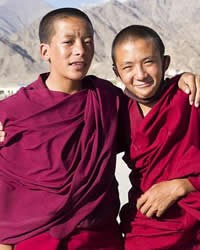
Most Ladakhi follow Tibetan Buddhism, especially forms of Vajrayana Buddhism influenced by Tibetan religious traditions. Monasteries, monks, prayer rituals, sacred festivals, prayer flags, and pilgrimage sites all play important roles in religious life. Buddhist teachings concerning karma, reincarnation, merit, and spiritual discipline strongly shape cultural values and daily practices.
Alongside formal Buddhism, many Ladakhi also retain older folk religious beliefs involving local spirits, sacred mountains, ancestral customs, and supernatural forces connected to the natural world. Ritual specialists may be consulted for protection, healing, blessings, or guidance during sickness and hardship. Fear of unseen spiritual powers can remain influential in daily life.
A minority of Ladakhi communities follow Islam, especially in regions historically connected with Central Asian trade routes.
Very few Ladakhi in China have heard a clear biblical presentation of the gospel. Access to Christian resources and long-term Christian witness remains very limited in many Himalayan and Tibetan regions.
The Ladakhi need faithful access to the gospel through Scripture, discipleship, personal relationships, and compassionate Christian witness presented with humility and cultural understanding. Because Buddhist identity is deeply tied to family and community life, individuals who become interested in following Christ may face social pressure or isolation.
Practical needs include healthcare access, transportation, educational opportunities, economic stability, and support for isolated mountain communities. High-altitude living conditions and geographic isolation can make daily life difficult, especially during severe winters.
There is also a great need for Christian resources in Ladakhi language varieties, including audio Scripture and oral discipleship tools suited for mountain communities with strong oral traditions. Spiritually mature believers willing to serve long-term among Himalayan peoples are greatly needed.
Pray that the Ladakhi people in China will hear a clear and understandable presentation of the gospel in their own language.
Pray that God will raise up compassionate Christian workers who are willing to serve faithfully among the Ladakhi communities of the Himalayan region.
Pray that the Ladakhi people will be adopted through the People Group Adoption program so that ongoing prayer and future gospel engagement will continue among them.
Pray that God will provide Scripture resources, discipleship tools, and faithful local believers who can help establish strong biblical foundations among the Ladakhi people.
Scripture Prayers for the Ladakhi in China.
https://en.wikipedia.org/wiki/Ladakhis
https://en.wikipedia.org/wiki/Ladakhi_language
https://en.wikipedia.org/wiki/Ladakh
https://read.dukeupress.edu/cssaame/article/43/1/10/351843/Little-Tibet-Positioning-Ladakh-as-a-Homeland-for
https://www.atlasofhumanity.com/ladakh
| Profile Source: Joshua Project |