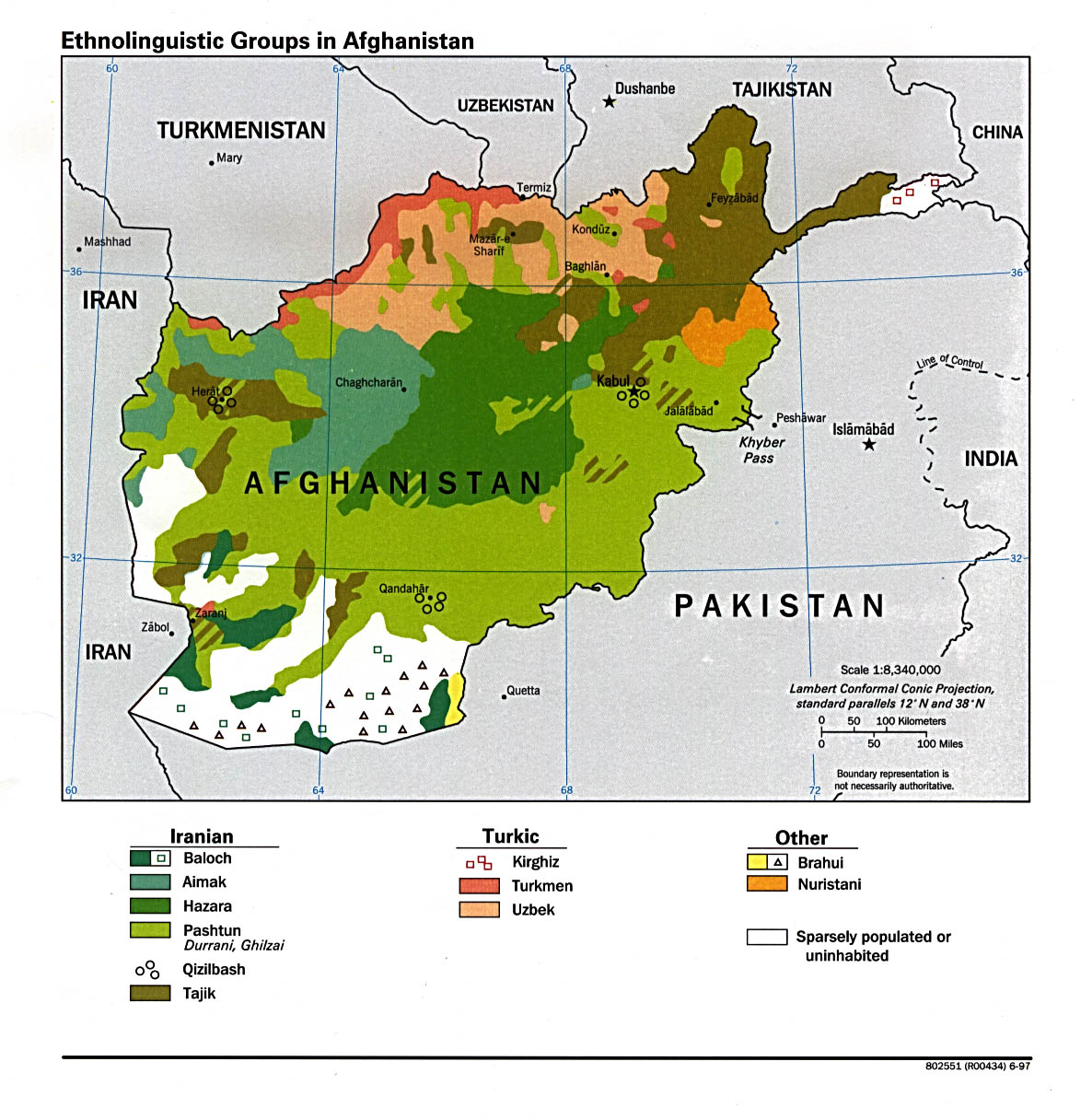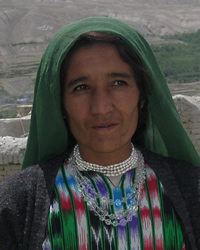

The Ishkashimi are a small Iranian-speaking people living primarily in the Badakhshan Province of northeastern Afghanistan near the border with Tajikistan. Smaller Ishkashimi communities also live across the border in Tajikistan's Gorno-Badakhshan region. Their homeland lies within the remote Pamir mountain region, an area known for its rugged terrain, isolated valleys, and remarkable ethnic and linguistic diversity. The Ishkashimi language belongs to the Southeastern Iranian branch of the Indo-Iranian language family and is closely related to Sanglechi and other Pamiri languages.
The Ishkashimi have preserved a distinct identity for centuries despite living among larger Persian-speaking and Tajik populations. Their language has no long-established written tradition and is considered endangered because younger generations increasingly use Dari for education, government, and wider communication. Linguists estimate that only a few thousand speakers remain, making Ishkashimi one of the smaller surviving Pamiri languages.
Historically, the Ishkashimi lived in isolated mountain communities connected through trade routes running across the Pamirs and the Wakhan Corridor. Oral tradition, family lineage, and village identity have long been important in preserving their culture. The difficult geography of the region helped maintain their distinct language and customs, though modernization, migration, and outside influence increasingly pressure traditional community life.
The Ishkashimi traditionally live as mountain farmers, herders, and traders. Families cultivate crops suited to high-altitude valleys, including wheat, barley, potatoes, beans, and small garden vegetables. Livestock such as goats, sheep, cattle, and yaks are important sources of food, milk, wool, and income. Agriculture in the Pamirs is difficult because of short growing seasons, cold winters, and rocky terrain.
Village life revolves around extended family relationships and close cooperation between households. Homes are often built from stone, mud brick, and timber using local materials adapted to harsh mountain weather. Men frequently travel for trade, transport work, or seasonal labor, while women carry major responsibilities related to household management, food preparation, childcare, and farming support. Oral storytelling, poetry, music, and local traditions continue to help preserve Ishkashimi identity.
Most Ishkashimi are multilingual and commonly speak Dari in addition to their own language. In some areas they also interact regularly with Wakhi, Tajik, and Shughnani communities. Younger generations increasingly leave mountain villages for education, government employment, or economic opportunities elsewhere in Afghanistan or Tajikistan. This migration contributes to language decline and gradual assimilation into broader Persian-speaking society.
Life in Badakhshan remains physically demanding. Mountain isolation, weak infrastructure, limited healthcare access, harsh winters, and economic hardship continue to affect many communities throughout the region. Political instability and insecurity in Afghanistan have also increased uncertainty for families living in remote mountain districts.
The Ishkashimi are primarily Muslims, and many belong to the Nizari Ismaili branch of Islam, which has historically been influential throughout parts of Badakhshan and the Pamir Mountains. Religious life commonly includes prayer, fasting, observance of Islamic festivals, and loyalty to community religious traditions. Ismaili identity often shapes social relationships, ethics, and communal life within Pamiri communities.
Alongside formal Islamic belief, traditional spiritual ideas and folk practices may also influence daily life. In isolated mountain societies, beliefs involving blessings, sacred sites, supernatural protection, curses, and unseen spiritual forces sometimes continue alongside official religious teaching. Family customs and local tradition remain deeply intertwined with religious identity.
Very few Ishkashimi have had meaningful exposure to biblical Christianity. Christianity is often viewed as foreign and outside acceptable community life in the region. Geographic isolation, language barriers, and strong religious identity have limited gospel access among the Ishkashimi people. They need to hear clearly that forgiveness of sins and reconciliation with God come through Jesus Christ alone rather than through religious heritage, ritual observance, or human effort.
The Ishkashimi remain largely unreached with the gospel, and there are very few known believers among them. Their small population, isolated mountain setting, and endangered language create significant barriers to sustained ministry. Christian workers willing to serve among the Ishkashimi would need patience, cultural sensitivity, linguistic commitment, and long-term relationship building.
One major need is the preservation and development of the Ishkashimi language itself. Because the language is endangered and lacks a strong written tradition, younger generations increasingly shift toward Dari and other dominant regional languages. Audio Scripture, oral Bible storytelling, and carefully developed translation work could be especially important for meaningful gospel communication.
Practical needs are also significant. Many mountain communities face limited educational opportunities, weak healthcare systems, economic hardship, transportation difficulties, and vulnerability to harsh winters and environmental conditions. Compassionate ministry that addresses both physical and spiritual needs could help demonstrate the love of Christ in meaningful ways among the Ishkashimi people.
Pray that the Ishkashimi people will hear a clear presentation of the gospel and place their faith in Jesus Christ for salvation.
Pray that God will provide culturally understandable Scripture resources and audio Bible materials in the Ishkashimi language.
Pray that the Ishkashimi people will be adopted through the People Group Adoption program so that churches and believers will commit to sustained prayer and future gospel outreach among them.
Pray that God will raise up faithful Christian workers who are willing to serve among the Ishkashimi with wisdom, humility, perseverance, and genuine love for the people.
Scripture Prayers for the Ishkashimi in Afghanistan.
https://en.wikipedia.org/wiki/Ishkashimi_language
https://en.wikipedia.org/wiki/Ishkashim,_Afghanistan
https://www.ethnologue.com/language/isk/
https://www.omniglot.com/writing/ishkashimi.htm
https://www.researchgate.net/publication/270346202_The_Effect_of_Accessibility_on_Language_Vitality_The_Ishkashimi_and_the_Sanglechi_Speech_Varieties_in_Afghanistan
https://www.academia.edu/32357561/Ishkashimi_A_Fathers_Language_How_a_Very_Small_Language_Survive
| Profile Source: Joshua Project |