




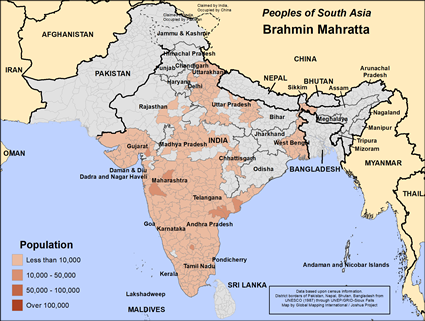
The Mahratta Brahmin are a Brahmin community associated with the Marathi-speaking regions of western India, especially the state of Maharashtra. As part of the broader Brahmin tradition within Hindu society, they have historically been connected with religious learning, temple duties, scholarship, administration, and advisory roles. Their history is closely linked with the development of Marathi culture and with the political and social history of the Maratha kingdoms that shaped much of western India.
Over the centuries, Mahratta Brahmins became influential in areas such as education, government service, literature, and religious instruction. Some families preserved strong traditions of Sanskrit learning and Hindu philosophy, while others moved into modern professions including law, business, medicine, engineering, and academics. Despite modernization and urban migration, many still maintain a strong sense of cultural heritage tied to language, family lineage, and religious identity.
Many Mahratta Brahmin families now live in cities and large towns, though some remain in smaller communities throughout Maharashtra and neighboring regions. Education is generally highly valued, and many families encourage professional careers and academic achievement. Employment may include business, technology, education, medicine, civil service, finance, and other skilled occupations.
Family life often reflects a blend of traditional and modern influences. Respect for elders, care for family reputation, and participation in religious festivals remain important cultural values. Meals commonly include rice, lentils, vegetables, flatbreads, and regional Maharashtrian cuisine. Festivals, weddings, and religious observances continue to play a major role in preserving family and community identity.
Urbanization and globalization have brought significant cultural change. Younger generations are increasingly influenced by modern secular values, career pressures, and global culture, while older generations may seek to preserve traditional customs and religious practices. This tension between tradition and modernity shapes much of contemporary life within the community.
The Mahratta Brahmin primarily follow Hinduism and are often deeply connected to its philosophical, ritual, and devotional traditions. Religious life may include temple worship, reverence for Hindu scriptures, participation in festivals, household rituals, and devotion to particular deities. Some families maintain practices connected to priestly duties, astrology, ceremonial observances, and Sanskrit traditions.
Within the broader Hindu framework, beliefs concerning karma, rebirth, ritual purity, and liberation from the cycle of rebirth commonly influence worldview and daily practice. In some cases, philosophical Hinduism is combined with folk traditions, superstition, or ritual practices connected to blessings, ancestral customs, and spiritual protection.
Because many Mahratta Brahmins possess strong intellectual and religious traditions, gospel conversations may involve deep philosophical questions and long-established assumptions about spirituality and salvation. Those who come to Christ may face social resistance, family disappointment, or pressure to maintain traditional religious identity. Biblical discipleship grounded firmly in Scripture is essential for lasting spiritual growth.
The Mahratta Brahmin need clear exposure to the gospel of Jesus Christ presented with both biblical faithfulness and thoughtful understanding of their cultural and intellectual background. Many have little understanding of salvation by grace through Christ alone and may view Christianity primarily through cultural or historical assumptions rather than through Scripture itself.
Believers from Brahmin backgrounds need strong discipleship, fellowship, and encouragement as they navigate family expectations and social pressures. Mature local churches and trained Christian leaders are needed to help answer questions, disciple new believers, and communicate biblical truth clearly.
Practical needs also exist beneath outward educational and professional success. Many experience pressures related to achievement, social expectations, materialism, and spiritual emptiness. The hope of the gospel offers forgiveness, reconciliation with God, and true peace that cannot be found through ritual, philosophy, or personal achievement.
Pray that the Mahratta Brahmin would encounter the truth of the gospel and come to understand salvation through Jesus Christ alone rather than through religious effort or tradition.
Pray that Christian believers from Brahmin backgrounds would grow in biblical wisdom, courage, and spiritual maturity as they follow Christ faithfully.
Pray that the Mahratta Brahmin would be adopted through the People Group Adoption program so that ongoing prayer, discipleship, and future gospel engagement would continue among them.
Pray that pastors, evangelists, and Christian workers serving among the Mahratta Brahmin would communicate biblical truth with humility, clarity, and love while building meaningful relationships within the community.
Scripture Prayers for the Brahmin Mahratta in India.
https://peoplegroups.org/explore/GroupDetails.aspx?peid=45508
https://www.britannica.com/topic/Brahman-Hindu-caste
https://www.britannica.com/place/Maharashtra
https://www.ethnologue.com/
https://www.britannica.com/topic/Hinduism
| Profile Source: Joshua Project |



