


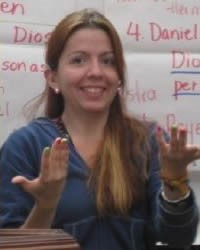

In many situations, Deaf people are viewed as disability groups, but a more accurate approach is to consider them as distinct people groups. They have their own unique languages and culture.
Unlike most people groups, Deaf people can be found in every country in the world and often blend in with the broader community around them. That includes the Deaf in Colombia.
There are many common experiences shared by Deaf people around the world that contribute to Deaf culture. Since most Deaf people are born to hearing parents, and very few of those parents learn to sign, many Deaf people are isolated from their family and the broader community. Instead of acquiring language from their parents, many acquire language from other Deaf in the community or from a Deaf school.
Though the majority of the people in Colombia are Christian, the Deaf lag behind because they require special communication skills.
While many Deaf people have some degree of bilingualism, for most of them, it is impossible to fully learn a spoken language that they cannot hear. It is becoming more common around the world for Deaf people to learn more than one sign language.
Because of lack of access to the spoken language, many Deaf people have a difficult time participating in church services and activities; relatively little Bible translation work has been done in sign languages and interpreted church services provide only the most basic of access to the Deaf community. Just like spoken languages, sign languages are not universal and vary widely from country to country and often even within a country. For Deaf people to have full access to scripture, they need both Bible translation in their heart language and services in sign language.
Pray for the Lord to pave the way for the spiritual needs of the Deaf in Colombia.
Pray for the Lord to reach the Deaf in Colombia through dreams and visions.
Pray for him to raise up loving Christians to work in Deaf schools.
Scripture Prayers for the Deaf in Colombia.
| Profile Source: Joshua Project |


