


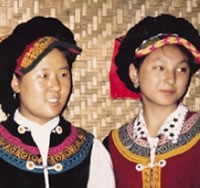

The Mixisu are a small ethnic community living in the mountainous southern part of Sichuan Province in China, particularly within Xichang and Mianning counties in the Liangshan Yi Autonomous Prefecture. Although officially classified by the Chinese government under the larger Yi nationality, the Mixisu maintain a distinct ethnic identity and refer to themselves as Mixisu. The Han Chinese have also called them Shuitian Ren, meaning "water fields people," though this label has been used broadly for several different groups in southern China.
Historically, the Mixisu lived among the powerful Nosu Yi people and suffered greatly under the old slave system that dominated parts of southern Sichuan before the 1950s. For generations, Nosu raiding parties reportedly captured Mixisu people as slaves and concubines. The Communist government abolished slavery in the region after taking control in the early years of the People's Republic of China.
The Mixisu likely descend from older Yi-related peoples who migrated into the rugged mountain areas of southern Sichuan to escape warfare and political pressure elsewhere in southwest China. Isolation in the highlands helped preserve their separate identity even while they became surrounded by other Yi-speaking peoples.
Today the Mixisu mainly live as farmers and herdsmen in the mountainous terrain of southern Sichuan. Agriculture and livestock care remain central to daily life, with families cultivating crops suited to mountain conditions while also raising animals for food, labor, and income.
Village life is generally quiet and strongly centered around family and local community relationships. Extended families often remain closely connected, and cooperation among relatives and neighbors is important for farming, caring for livestock, and surviving the difficulties of mountain life. The rugged terrain and relative isolation of many villages have helped preserve traditional customs and local identity.
Food commonly includes rice, corn, vegetables, preserved foods, and locally raised meat when available. Rural communities in Sichuan often rely heavily on seasonal agricultural cycles, and daily routines are shaped by planting and harvest seasons. Traditional festivals and family ceremonies continue to play an important role in community life.
Economic opportunities in isolated mountain areas can be limited. Some younger people may leave their villages to seek work in towns and cities, while older generations often remain tied to traditional farming life. Access to advanced healthcare, transportation, and educational opportunities may still be difficult in remote regions.
Although many Mixisu do not strongly identify with organized religion, traditional spirit worship and ancestor veneration continue to influence their beliefs and customs. Ceremonies connected to ancestral spirits and supernatural forces are still observed during various times of the lunar calendar.
Like many traditional peoples in southwest China, the Mixisu worldview includes belief in unseen spiritual powers that can influence health, prosperity, crops, and family well-being. Rituals and ceremonies may be performed to seek blessing, avoid misfortune, or maintain harmony with ancestral spirits.
Because of historical isolation and the domination of neighboring peoples, very few Mixisu have ever had meaningful exposure to the gospel. Earlier Christian outreach in southern Sichuan often focused on larger populations, leaving many smaller groups such as the Mixisu largely unreached. Even where churches exist in nearby cities, few believers have intentionally taken the gospel into Mixisu communities.
The Mixisu need faithful access to the gospel through Scripture, discipleship, and compassionate Christian witness presented in ways they can understand culturally and linguistically. Many have never heard a clear biblical explanation of salvation through Jesus Christ.
Practical needs include healthcare access, transportation infrastructure, educational opportunities, and economic stability for families living in remote mountain regions. Geographic isolation and poverty continue to affect many communities in southern Sichuan.
There is also a strong need for spiritually mature believers willing to build long-term relationships among the Mixisu and help establish biblically grounded local fellowships. Because many traditional beliefs involve fear of spirits and ancestral powers, careful biblical discipleship is needed to help future believers grow in freedom and spiritual maturity.
Pray that the Mixisu people will hear a clear and understandable presentation of the gospel in their own language and cultural setting.
Pray that God will raise up compassionate Christian workers who are willing to serve faithfully among the remote Mixisu communities of southern Sichuan.
Pray that the Mixisu people will be adopted through the People Group Adoption program so that ongoing prayer and future gospel engagement will continue among them.
Pray that any believers living near Mixisu areas will grow strong in biblical faith and boldly share the truth of Jesus Christ with surrounding unreached peoples.
Scripture Prayers for the Mixisu in China.
https://irp-cdn.multiscreensite.com/5ddddb20/files/uploaded/mixisu.pdf
https://en.wikipedia.org/wiki/Yi_people
https://history.stanford.edu/publications/coming-terms-nation-ethnic-classification-modern-china
https://people-groups.asiaharvest.org/China/
| Profile Source: Joshua Project |



