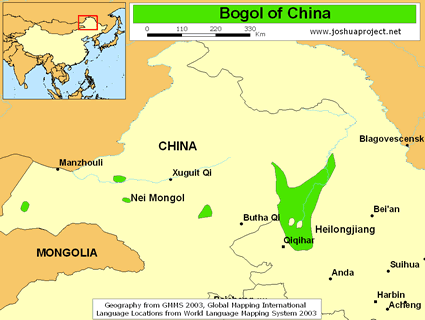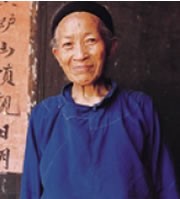

The Bogol are a small ethnic community living in northeastern China, particularly in the Morin Dawa Daur Autonomous Banner of Inner Mongolia. They are historically connected to the Daur people and are descended from groups who were once held as hereditary servants or slaves within Daur society. Although slavery among the Daur officially ended in the early twentieth century, the Bogol gradually developed their own separate identity and community life.
Historically, the Bogol came from two primary backgrounds. Some were descendants of rebels punished during the Qing Dynasty by being forced into hereditary servitude, while others descended from prisoners taken during regional conflicts such as the Taiping Rebellion. After emancipation, many Bogol established their own villages but continued to face social separation from the Daur, including restrictions on intermarriage.
The Bogol speak the local Daur dialect rather than a completely separate language, though they maintain a distinct social identity. Over time, Chinese cultural influence increased among the Bogol, especially through education, government policy, and interaction with surrounding Han Chinese communities.
Many Bogol families live in rural communities where farming, livestock care, seasonal labor, and local trade support daily life. Their region of Inner Mongolia includes grasslands, farming settlements, and river valleys shaped by long winters and a harsh northern climate.
Meals commonly include wheat-based foods, noodles, dumplings, meat dishes, dairy products, and locally grown vegetables common throughout northeastern China and Inner Mongolia. Family relationships and community ties remain important parts of daily life.
The Bogol have historically adopted many Chinese customs and traditions more readily than some neighboring Daur communities. They enthusiastically celebrate Chinese New Year and Spring Festival traditions, which play a major role in family gatherings and social life.
Like many smaller minority communities in China, younger generations sometimes leave rural areas for education and employment opportunities in larger towns and cities. Economic transition, modernization, and cultural assimilation continue to influence community identity and traditional ways of life.
The Bogol traditionally practice Chinese folk religion mixed with animistic beliefs and spiritual practices inherited from Daur religious traditions. Their spiritual worldview includes belief in numerous spirits and supernatural powers connected to prosperity, protection, and daily life.
Historical accounts describe the Bogol as honoring a complex collection of twenty-four spirits represented through paintings, carved figures, and ritual objects. Spiritual ceremonies and offerings are believed to help maintain harmony and protection from harmful forces.
Traditional beliefs remain closely tied to family customs and cultural identity. Very few Bogol have had meaningful exposure to biblical Christianity, and there are reportedly no known established Christian communities among them. Many still have little opportunity to hear a clear explanation of salvation through Jesus Christ alone.
The Bogol need greater access to faithful Christian witness communicated clearly within their cultural and linguistic setting. Because they are a very small and little-known people group, few ministry efforts have specifically focused on them.
There is a need for believers who are willing to build long-term relationships, learn local customs, and disciple those who may face social pressure for following Jesus Christ. Access to Scripture, Christian teaching materials, and healthy local fellowships is important for long-term spiritual growth.
Practical needs also remain significant in rural northeastern China, including economic opportunity, healthcare access, support for struggling families, and assistance for communities experiencing social and cultural change. Compassionate Christian ministry can help demonstrate the love of Christ while opening doors for meaningful gospel conversations.
The Bogol would benefit from strong local fellowships capable of discipling believers, strengthening families, and continuing to share the gospel throughout Inner Mongolia and neighboring communities.
Pray that the Bogol people will hear a clear presentation of the gospel and come to understand salvation through Jesus Christ alone.
Pray that God will raise up faithful Christian workers who are willing to serve among the Bogol with wisdom, humility, endurance, and compassion.
Pray that the Bogol people will be adopted through the People Group Adoption program so that sustained prayer, outreach, discipleship, and future gospel engagement will continue among them.
Pray that any believers among the minority peoples of northeastern China will grow strong in biblical faith and boldly share the truth of Christ with neighboring communities.
Scripture Prayers for the Bogol in China.
https://peoplegroups.org/people_groups/pg006692/
https://irp-cdn.multiscreensite.com/5ddddb20/files/uploaded/bogol.pdf
https://www.britannica.com/place/Inner-Mongolia
https://www.britannica.com/topic/animism
https://www.asiaharvest.org/china-resources/inner-mongolia
| Profile Source: Joshua Project |