




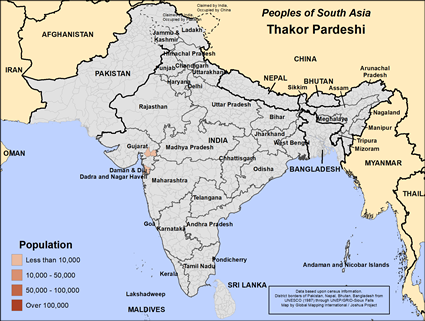
The Thakor Pardeshi are a community found primarily in western India, especially in Gujarat and neighboring regions. They are connected to the wider Thakor social identity, a large and diverse grouping within Gujarati society. The term "Pardeshi" traditionally carries the meaning of "outsider" or "from another place," suggesting historical migration or movement from one region to another. Over generations, the Thakor Pardeshi developed their own community identity while remaining shaped by the broader cultural traditions of Gujarat and western India.
Most Thakor Pardeshi speak Gujarati, though Hindi may also be used depending on location and education. Historically, many families were connected to agriculture, livestock care, manual labor, or local village occupations. Rural life and community relationships have strongly influenced their traditions, customs, and social organization. Modernization and urban migration have gradually changed the lifestyle of younger generations, yet family ties and inherited social structures remain influential in many areas.
Many Thakor Pardeshi families live in villages or semi-urban communities where farming, agricultural labor, transportation work, construction, factory employment, and small-scale trade provide income. Economic conditions vary greatly depending on land ownership, education, and access to nearby cities. Some families have improved financially through migration and business opportunities, while others continue to face economic instability and limited advancement.
Family life is usually close-knit, with strong respect for elders and community traditions. Marriages are commonly arranged within the broader social community, and extended families often maintain close relationships. Social life frequently centers around weddings, religious festivals, seasonal celebrations, and village gatherings. Traditional Gujarati foods such as flatbreads, lentils, rice, vegetables, and spiced dishes are common in daily life.
Education and technology are increasingly influencing younger generations, especially in urban areas. Even so, some rural communities still struggle with inconsistent educational quality, limited healthcare access, and unstable employment opportunities. Migration to cities for labor and financial support has become common among younger workers seeking better opportunities for their families.
The Thakor Pardeshi primarily follow Hindu traditions and participate in a mixture of mainstream Hindu worship and regional folk religious practices. Devotion to Hindu gods and goddesses, temple worship, festival observances, offerings, and family rituals are common expressions of faith. Religious customs are often deeply connected to family identity and local village traditions.
In many communities, folk religion and animistic beliefs are blended with formal Hindu practices. Some families may fear evil spirits, curses, or unseen spiritual forces believed to affect health, crops, family wellbeing, or prosperity. Ritual specialists, local priests, or spiritual healers may sometimes be consulted during sickness, hardship, or spiritual concern. This combination of Hinduism and folk spirituality creates a syncretistic religious environment.
Most Thakor Pardeshi have had little exposure to the biblical gospel. They need to hear that salvation and forgiveness of sins come through Jesus Christ alone and not through rituals, offerings, religious merit, or inherited tradition.
The Thakor Pardeshi need greater access to clear biblical teaching and faithful Christian witness presented with humility, patience, and genuine compassion. In many areas there are few mature churches or trained believers able to disciple people from their cultural background. Social pressure and fear of rejection can discourage individuals who become interested in following Christ.
Practical challenges also affect many families. Economic uncertainty, inconsistent employment, educational limitations, healthcare access, and the pressures of rural and urban transition continue to impact many communities. Younger generations often face tension between preserving traditional expectations and adapting to modern economic realities.
There is a need for long-term Christian workers who can build meaningful relationships, provide biblical discipleship, and help establish healthy local fellowships rooted in Scripture. Christian resources in Gujarati and compassionate community ministry can help open doors for lasting gospel witness among the Thakor Pardeshi.
Pray that the Thakor Pardeshi people will hear a clear presentation of the gospel and come to faith in Jesus Christ.
Pray that God will raise up faithful Christian workers who will serve among the Thakor Pardeshi with wisdom, love, and perseverance.
Pray that the Thakor Pardeshi people will be adopted through the People Group Adoption program so that churches and believers will commit to ongoing prayer and future gospel outreach among them.
Pray that any believers among the Thakor Pardeshi will grow strong in biblical truth and boldly share the message of Christ with their families and neighboring communities.
Scripture Prayers for the Thakor Pardeshi in India.
https://en.wikipedia.org/wiki/Thakor
https://en.wikipedia.org/wiki/Gujarati_people
https://en.wikipedia.org/wiki/Gujarat
| Profile Source: Joshua Project |



