




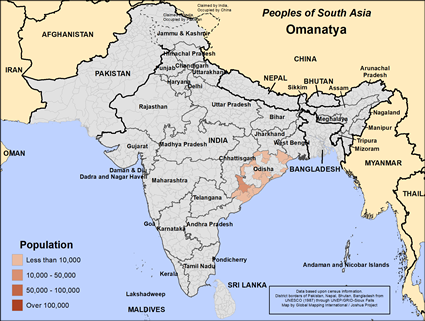
The Omanatya are a tribal community found primarily in the Koraput and Nabarangpur districts of Odisha in eastern India. They are also known by related names such as Omanatyo, Amanatya, Omanaito, and Omaito. Historical traditions within the community connect their name to the word "Amatya," meaning minister or counselor, and community legends claim descent from a minister who served in the court of Sri Ram before turning to agriculture for livelihood.
The Omanatya are an Odia-speaking cultivating people who have historically lived in hill slopes and foothill regions where streams and fertile land support farming life. Their settlements are often organized in separate hamlets that help preserve their cultural identity and social traditions. Over generations, they developed a close-knit tribal society shaped by agriculture, clan relationships, oral traditions, and village leadership systems.
Like many tribal communities in India, the Omanatya are experiencing social and economic changes through modernization, government development programs, migration, and increased exposure to urban culture. Even so, many continue to preserve strong traditional customs and community structures.
The Omanatya are traditionally agricultural people. They cultivate paddy, ragi, sugarcane, tobacco, pulses, and oilseeds using simple farming methods and locally made agricultural tools. Many families also raise cattle, goats, sheep, and poultry, and they supplement their livelihood through fishing, occasional hunting, gathering forest products, and seasonal labor.
Family and clan relationships are very important within Omanatya society. Most households are nuclear families, though extended families also exist. The community is divided into clans and totemic groups associated with animals, plants, or natural objects such as tigers, cobras, tortoises, parrots, pumpkins, and stones. Village councils led by hereditary leaders help settle disputes and organize religious and social affairs.
Their houses are commonly built from mud with thatched or tiled roofs and are arranged in clusters along village paths. Meals typically include rice and ragi along with vegetables, fish, meat, and locally gathered foods. Both men and women often participate actively in farming and household work. Traditional songs, dances, and festivals remain important parts of community life, especially during harvest celebrations and weddings.
Modern influences such as education, migration, technology, and economic pressure are gradually reshaping traditional life, especially among younger generations seeking opportunities beyond the village.
The Omanatya follow a blend of Hinduism and animistic tribal beliefs. They worship Hindu gods and goddesses while also maintaining devotion to traditional tribal deities, village spirits, ancestral powers, and local protective beings. Their religious life includes festivals, rituals, sacrifices, and ceremonies tied to agriculture, fertility, family events, and community protection.
Traditional deities such as Thakurani, Bhairab, Gram Devti, and Duma Devta are honored alongside broader Hindu worship practices. Animal sacrifice and ritual offerings are part of some religious ceremonies, and spiritual leaders such as pujari and disari guide ritual life within the community. Folk beliefs concerning spirits, omens, purification, and supernatural protection continue to shape everyday religious practice.
Although the Omanatya may be deeply devoted to inherited religious traditions, they still need the gospel of Jesus Christ and the assurance of salvation that comes through faith in Him rather than through rituals, sacrifices, or ancestral customs.
The Omanatya need greater access to Scripture, biblical discipleship, and faithful Christian witness presented with humility and cultural understanding. Many tribal communities in Odisha still have limited exposure to clear evangelical teaching and long-term discipleship rooted in God's Word.
Practical needs include improved healthcare, education, agricultural support, economic opportunity, clean water access, and infrastructure development in remote hill regions. Families dependent on farming and seasonal labor often face financial instability and limited access to resources.
There is also a need for mature believers who are willing to build long-term relationships, serve compassionately, and establish strong local fellowships that can disciple future generations while respecting the Omanatya people's cultural dignity.
Pray that the Omanatya people would hear the gospel clearly and come to know Jesus Christ as Savior and Lord.
Pray that God would raise up compassionate and biblically faithful workers who will serve among the Omanatya with wisdom, patience, and perseverance.
Pray that the Omanatya would be adopted through the People Group Adoption program so that sustained prayer, discipleship, and long-term gospel outreach would continue among them.
Pray for strengthened families, improved education and healthcare, stable livelihoods, and spiritual openness within Omanatya communities throughout Odisha.
Scripture Prayers for the Omanatya in India.
https://ostm.in/tribes_of_odisha/omanatya/
https://repository.tribal.gov.in/bitstream/123456789/73814/1/SCST_2013_handbook_0034.pdf
https://atlcodisha.in/uploads/images/tribes/OMANANTYA.pdf
https://kbk.nic.in/koraputtribes/nabomanatya.htm
https://www.koraputlivingheritage.com/people/omanatya
| Profile Source: Joshua Project |



