




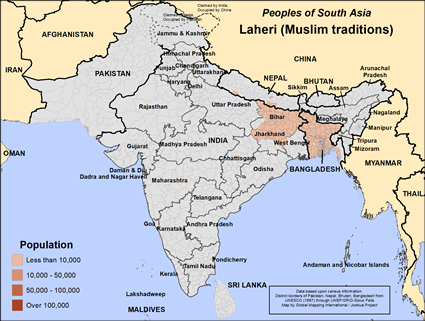
The Laheri are a Muslim community found in India, particularly within the western regions influenced by Gujarati culture and language. Historical information about the Laheri is limited, but like many smaller South Asian Muslim communities, their identity has been shaped through generations of family lineage, regional customs, trade relationships, and religious tradition. Their history reflects the blending of Islamic faith with the cultural patterns of western India, where communities often maintained distinct identities through marriage customs, occupation, and close social networks.
Over time, the Laheri have preserved their community identity while adapting to changing economic and social conditions. Some families have remained connected to traditional occupations and local village life, while others have migrated to towns and cities for employment and business opportunities.
Many Laheri families live in villages, market towns, and urban areas where they work in trade, labor, transportation, small businesses, agriculture, or service occupations. In commercial regions of western India, some families may also be involved in shopkeeping or local trading activity. Economic conditions vary widely depending on education, location, and access to opportunity.
Family relationships are central to Laheri social life. Extended families often maintain close involvement in marriage decisions, finances, and community matters. Respect for elders and preserving family reputation are highly valued. Weddings, religious celebrations, and family gatherings serve as important occasions for strengthening social ties.
Food traditions commonly reflect Gujarati and broader western Indian cuisine, including rice, flatbreads, lentils, vegetables, meat dishes, and regional spices. Hospitality is often considered an important cultural value within Muslim communities in the region.
While some Laheri families may experience economic stability, others face challenges related to employment, healthcare access, education, or rising living costs. Younger generations may pursue work in larger cities while remaining strongly connected to family traditions and community identity.
The Laheri follow Islam, primarily within the Sunni tradition common throughout much of South Asia. Their religious life typically includes belief in Allah as the one true God and Muhammad as His prophet. Islamic practices commonly include daily prayers, fasting during Ramadan, mosque attendance, giving alms, and participation in Islamic festivals and family ceremonies.
Like many South Asian Muslim communities, some Laheri religious practices may also include syncretistic influences from local culture and folk traditions. Beliefs involving charms, blessings, spiritual healers, saints, or protection from unseen spiritual forces can sometimes exist alongside formal Islamic teaching. Religious identity is usually deeply connected to family loyalty and community belonging.
Most Laheri have had little exposure to a clear biblical presentation of the gospel. Many may know Jesus only as a prophet mentioned in Islamic teaching and have never heard the biblical message of salvation through His death and resurrection.
The Laheri need faithful access to the gospel through Scripture, personal relationships, discipleship, and compassionate Christian witness presented with cultural understanding and respect. Because religious identity is closely tied to family and community, those who become interested in following Christ may face strong social pressure or rejection.
Practical needs may include improved educational opportunities, healthcare access, stable employment, and support for families facing financial hardship. Ministries focused on literacy, medical care, and community development can help build trust and open opportunities for meaningful gospel engagement.
There is also a need for mature local believers who can establish biblically grounded churches and faithfully share the gospel among neighboring Muslim communities.
Pray that the Laheri people will hear a clear and faithful presentation of the gospel in languages they understand.
Pray that God will raise up compassionate Christian workers who will serve among the Laheri with humility, wisdom, and perseverance.
Pray that the Laheri people will be adopted through the People Group Adoption program so that sustained prayer and future gospel engagement will continue among them.
Pray that any believers living near the Laheri community will grow strong in biblical faith and boldly share the truth of Jesus Christ with surrounding peoples.
Scripture Prayers for the Laheri (Muslim traditions) in India.
https://peoplegroups.org/
https://en.wikipedia.org/wiki/Islam_in_India
https://www.britannica.com/topic/Sunni
https://www.britannica.com/place/Gujarat-state-India
| Profile Source: Joshua Project |



