




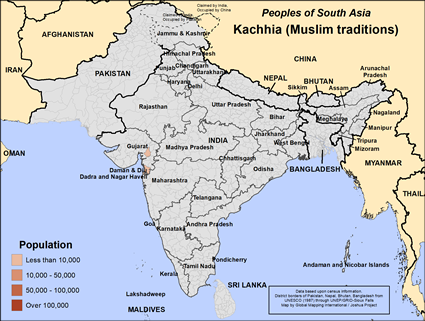
The Kachhia who follow Muslim traditions are found primarily in the Indian state of Gujarat, with related communities also present in neighboring regions and across the border in Sindh, Pakistan. The Kachhia are not a single clan but a cluster of related tribes and community groups connected through shared cultural and occupational traditions. Their primary language in India is generally Gujarati, though some also speak Urdu or regional dialects depending on location.
Historically, the Kachhia have been closely associated with agriculture, animal husbandry, and rural trade. Many became known as skilled farmers and livestock herders, especially in dry regions where careful management of animals and water resources was essential for survival. Camel breeding and trading were also important occupations for some families. Over generations, the community developed strong village-based social structures shaped by Islamic identity, regional customs, and family networks.
Though modernization has influenced younger generations, many Kachhia families continue to maintain close ties to traditional community life, cultural customs, and inherited occupations. Their history reflects adaptation to changing economic realities while preserving strong social and religious identity.
Many Kachhia families live in rural villages and smaller towns where farming, livestock care, agricultural labor, and small trade remain central to daily life. Crops may include wheat, millet, rice, vegetables, and regionally suitable grains depending on climate and local conditions. Animal husbandry continues to play an important role for some households, particularly in communities with pastoral roots.
Family relationships are highly valued within Kachhia society. Extended families often maintain close contact, and marriages are generally arranged within the broader community. Religious festivals, weddings, and family gatherings are major social events that reinforce community bonds and cultural traditions. Traditional music, folk dancing, and community celebrations remain important parts of social life in many areas.
Meals commonly include flatbreads, rice, lentils, vegetables, milk products, and meat dishes depending on family income and regional customs. While some Kachhia families have benefited from modernization and educational opportunities, others still face economic uncertainty, limited healthcare access, and unstable agricultural income, especially in poorer rural regions.
The Kachhia who follow Muslim traditions are primarily Sunni Muslims. They believe in Allah as the one true God and follow Islamic teachings based on the Quran and the traditions associated with Muhammad. Religious life commonly includes daily prayers, fasting during Ramadan, giving to the poor, mosque attendance, and participation in Islamic festivals such as Eid al-Fitr and Eid al-Adha.
Religious identity is deeply connected to family heritage and community belonging. In some areas, local customs and cultural traditions may exist alongside formal Islamic practice, especially in matters related to weddings, family ceremonies, and village customs. Community honor, hospitality, and respect for elders are often strongly emphasized.
Very few Kachhia have had meaningful exposure to biblical Christianity or a clear presentation of the gospel. Many know of Jesus primarily through Islamic teaching, where He is regarded as a prophet rather than the crucified and risen Son of God and Savior. Christian witness among them remains very limited.
The Kachhia people face both practical and spiritual needs. Many rural families struggle with unstable agricultural income, limited educational opportunities, economic insecurity, and inadequate healthcare access. Communities dependent on farming and livestock can also be affected by drought, changing markets, and limited infrastructure.
Spiritually, the Kachhia remain largely unreached with the gospel. There is a need for faithful Christian workers who are willing to build long-term relationships, serve communities with humility and compassion, and clearly communicate biblical truth in culturally understandable ways. Believers who can demonstrate the love of Christ through practical service and patient discipleship are greatly needed.
Practical ministries involving education support, vocational training, healthcare outreach, literacy programs, agricultural assistance, and family care may help open doors for meaningful gospel witness among the Kachhia people. Churches in nearby regions also need encouragement and boldness to faithfully share the gospel with Muslim communities.
Pray that the Kachhia people would hear the gospel clearly and come to understand who Jesus Christ truly is according to Scripture.
Pray for Christian workers to serve among the Kachhia with humility, wisdom, compassion, and perseverance.
Pray that the Kachhia people would be adopted through the People Group Adoption program so that ongoing prayer, outreach, discipleship, and future gospel engagement would continue among them.
Pray that believers in western India would faithfully share biblical truth with the Kachhia and demonstrate the love of Christ through both word and action.
Scripture Prayers for the Kachhia (Muslim traditions) in India.
https://www.peoplegroups.org/explore/GroupDetails.aspx?peid=45899
https://www.britannica.com/topic/Islam
https://en.wikipedia.org/wiki/Kutchi_Memon
https://censusindia.gov.in
| Profile Source: Joshua Project |



