




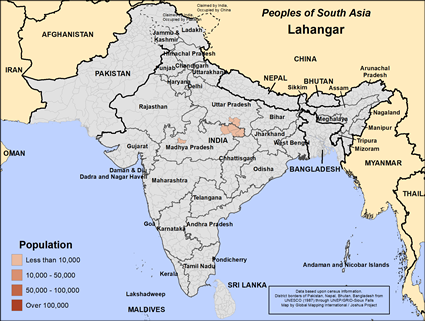
The Lahangar are a people group found in India, primarily associated with the Hindi-speaking regions of northern and central India. Historical information about the Lahangar is limited, but like many smaller caste and occupational communities in India, their identity has been shaped through generations of inherited social customs, family lineage, and community-based traditions. Their social structure developed within the broader framework of Hindu society, where occupation, kinship, and local customs often determined community identity and relationships.
Over generations, the Lahangar have maintained their distinct social identity through marriage patterns, cultural practices, and close family networks. Although modernization and urban migration have affected many traditional communities across India, smaller groups such as the Lahangar often continue to preserve long-standing customs and community loyalties.
Many Lahangar families likely live in villages, small towns, or expanding urban areas where they work in agriculture, manual labor, transportation, construction, trade, or small-scale business activity. Economic conditions can vary widely depending on region and access to employment opportunities. Some families may have stable livelihoods, while others face ongoing financial hardship and limited opportunities for advancement.
Family life is usually close-knit, with strong respect for elders and emphasis placed on maintaining family honor and social reputation. Marriages are often arranged with significant involvement from extended family members. Community gatherings connected to weddings, religious festivals, and seasonal celebrations remain important parts of social life.
Food commonly reflects the cuisine of northern India and may include flatbreads, rice, lentils, vegetables, dairy products, and locally prepared dishes seasoned with regional spices. Daily life often revolves around work responsibilities, household duties, education for children, and participation in religious observances.
For poorer families, challenges may include unstable employment, limited healthcare access, educational barriers, and inadequate infrastructure. Younger generations may seek work in larger cities while still maintaining strong ties to their home communities.
The Lahangar primarily follow Hindu traditions shaped by both mainstream Hindu worship and local folk religious customs. Their religious life may include temple worship, household shrines, offerings, fasting rituals, and participation in festivals honoring various Hindu gods and goddesses.
Like many traditional Hindu communities, their beliefs may also include syncretistic practices involving local spirits, ancestral customs, astrology, ritual purity, and fear of harmful spiritual forces. Religious ceremonies often accompany births, marriages, illnesses, agricultural seasons, and funerals. Religion is deeply woven into family and community identity rather than separated from daily life.
Most Lahangar have had little exposure to biblical Christianity or a clear explanation of the gospel. Many may know very little about Jesus Christ beyond limited cultural awareness and have never encountered biblical teaching concerning salvation through Him.
The Lahangar need faithful access to the gospel through Scripture, discipleship, and long-term Christian witness presented in culturally understandable ways. They need believers who are willing to serve with humility, compassion, and biblical conviction. Because family and community identity are strong, those who become interested in following Christ may experience social resistance or rejection.
Practical needs may include better healthcare access, improved educational opportunities, vocational training, and economic stability for struggling families. In some communities, poverty and inconsistent employment continue to create hardship.
There is also a need for spiritually mature local believers who can disciple others, establish biblically grounded churches, and faithfully share the gospel among neighboring communities.
Pray that the Lahangar people will hear a clear and understandable presentation of the gospel in their own language.
Pray that God will raise up compassionate Christian workers who are willing to serve faithfully among the Lahangar community.
Pray that the Lahangar people will be adopted through the People Group Adoption program so that ongoing prayer and future gospel engagement will continue among them.
Pray that any believers living near the Lahangar community will grow in biblical faith and boldly share the truth of Jesus Christ with surrounding peoples.
Scripture Prayers for the Lahangar in India.
https://peoplegroups.org/
https://en.wikipedia.org/wiki/Hindi_belt
https://www.britannica.com/topic/Hinduism
https://www.india.gov.in/topics/culture-heritage/communities
| Profile Source: Joshua Project |



