




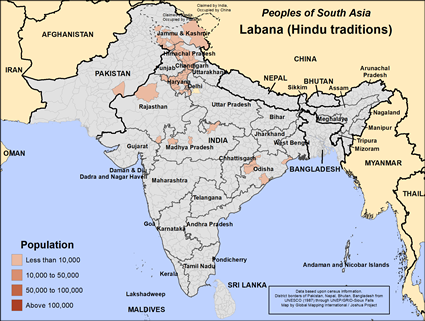
The Labana with Hindu traditions are a community found across northern and western India, especially in states such as Punjab, Haryana, Rajasthan, Delhi, and parts of Uttar Pradesh. They are also known as Lavana, Lubana, or Lubhana. Historically, the Labana were closely associated with the transport and trade of salt, and many scholars connect their name to words meaning "salt trade." Over time, they also became involved in cattle trading, agriculture, and long-distance transport work.
Some Labana traditions claim Rajput ancestry, while other historical studies link them to the broader Banjara trading and nomadic communities of India. Their history reflects centuries of migration, trade, and adaptation to changing political and economic conditions across northern India. Many Labana communities eventually settled into village life after periods of semi-nomadic movement connected to commerce and livestock transport.
Although many Labana today identify as Sikh, there are also Hindu and Muslim branches of the wider community. The Hindu Labana maintain distinct religious customs and community traditions while still sharing historical roots with the broader Labana heritage.
Many Hindu Labana families today work in agriculture, livestock care, transportation, trade, construction, labor, and small business. In rural areas, farming and cattle-related work remain important sources of livelihood, while younger generations increasingly pursue education, government jobs, urban employment, and business opportunities.
Family and clan identity remain important within Labana society. Community councils and elders often help settle disputes and preserve social customs. Traditionally, property inheritance followed family lineage patterns, and marriage customs were strongly regulated within the community. Some older customs discouraged remarriage for widows and divorced women.
Meals commonly reflect North Indian cuisine and may include wheat breads, rice, lentils, vegetables, dairy products, and regionally prepared meat dishes. Religious festivals, weddings, and family ceremonies remain important occasions for strengthening community identity and preserving inherited traditions.
Historically, the Labana were known for mobility and adaptability because of their trading background. Modernization and urban migration are continuing to reshape community life, especially among younger generations balancing traditional expectations with contemporary economic and educational opportunities.
The Labana with Hindu traditions primarily follow Hindu religious practices. Religious life commonly includes devotion to Hindu gods and goddesses, temple worship, sacred festivals, ritual ceremonies, and household religious observances connected to major life events.
In many Hindu Labana communities, religion is deeply connected to family heritage, social identity, and inherited custom. Folk beliefs, ancestral traditions, astrology, ritual purity practices, and local devotional customs may also shape everyday spiritual life. Some families claim connections to warrior or Rajput traditions and maintain strong cultural pride tied to ancestry and community history.
Although the Labana may value morality, devotion, and religious tradition, they still need the gospel of Jesus Christ and the assurance of salvation that comes through faith in Him rather than through ritual observance, ancestry, or inherited religion.
The Hindu Labana need greater access to biblical teaching, Scripture, discipleship, and faithful Christian witness presented with humility, wisdom, and cultural understanding. While some may have awareness of Christianity, many still have little clear understanding of the gospel and biblical salvation.
Practical needs may include stable employment, educational opportunity, healthcare access, support for rural farming families, and guidance for younger generations facing rapid social and economic change. Communities transitioning from traditional occupations into modern urban life may also experience family pressure, identity struggles, and spiritual uncertainty.
There is a need for mature believers who will patiently build relationships, demonstrate Christ's compassion through practical service, and establish strong local fellowships capable of discipling future generations in biblical truth.
Pray that the Hindu Labana people would hear the gospel clearly and come to know Jesus Christ as Savior and Lord.
Pray that God would raise up wise and compassionate Christian workers who will faithfully serve among the Labana community and share biblical truth with humility and love.
Pray that the Hindu Labana would be adopted through the People Group Adoption program so that sustained prayer, discipleship, and long-term gospel outreach would continue among them.
Pray for strengthened families, stable livelihoods, educational opportunity, and spiritual openness within Labana communities throughout India.
Scripture Prayers for the Labana (Hindu traditions) in India.
https://en.wikipedia.org/wiki/Labana
https://www.britannica.com/topic/Hinduism
https://www.dailyexcelsior.com/a-clan-of-warriors/
https://tlhjournal.com/uploads/products/6.nagesh-lakhanlal-sable-article.pdf
| Profile Source: Joshua Project |



