




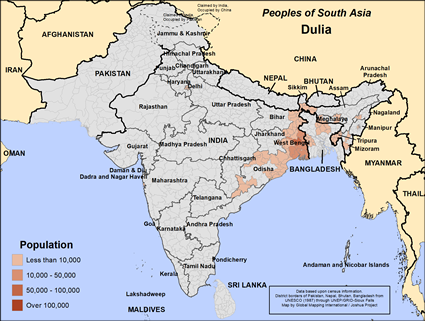
The Dulia are a small community found in India, primarily associated with eastern and northeastern regions where many tribal and rural peoples have historically lived through agriculture, forest work, and village-based economies. Their language and cultural identity have developed within the broader regional traditions of the Indian subcontinent, shaped by generations of local customs, caste influences, and surrounding ethnic groups.
Like many smaller communities in India, the Dulia have often remained socially and economically marginalized. Their history is not widely documented in major historical records, and much of their cultural continuity has been preserved through family traditions, oral history, and village life. Over time, modernization, migration, and economic pressures have gradually affected traditional ways of life, especially among younger generations seeking work outside their home communities.
Most Dulia families live in rural settings where daily life revolves around agriculture, manual labor, and close-knit family relationships. Farming, seasonal labor, and small-scale trade are common means of support. Rice, lentils, vegetables, and locally available foods form the basis of their diet, while village markets provide additional necessities.
Family structure is typically strong and community-oriented. Elders are respected, and important decisions are often influenced by family and social expectations. Weddings, seasonal festivals, and religious observances remain important parts of community identity and social life.
In many areas, access to education, healthcare, and economic opportunity remains limited. Rural infrastructure may be underdeveloped, making travel and communication difficult. Younger people sometimes move to larger towns or cities for employment, which can weaken traditional ties while also exposing families to new ideas and cultural pressures.
The Dulia are generally influenced by the religious traditions common to their surrounding region, including forms of Hindu belief and practice. Religious life may involve reverence for local deities, participation in seasonal festivals, ritual observances, and customs connected to family and village traditions.
In some settings, folk religion and animistic practices are blended with broader Hindu traditions. Spiritual concerns such as blessings, protection from harmful spirits, rituals for prosperity, and respect for ancestral customs may strongly influence daily life. This mixture of religious traditions can create deep spiritual bondage and confusion concerning the truth of the gospel.
Where there has been some exposure to Christianity, believers may still need strong biblical discipleship and encouragement to build their faith firmly on Scripture rather than cultural or syncretistic practices.
The Dulia need greater access to the gospel through faithful Christian witness, Scripture, and discipleship that clearly explains salvation through Jesus Christ alone. Local believers need encouragement, biblical training, and opportunities to grow into mature Christian leadership.
Practical needs are also significant in many Dulia communities. Poverty, limited healthcare access, educational challenges, and unstable employment can make everyday life difficult. Families in rural areas may struggle with poor infrastructure and limited opportunities for advancement.
Children and young adults especially need hope, stability, and godly guidance as they face changing cultural pressures and uncertain economic conditions. Compassionate Christian ministry that addresses both spiritual and practical concerns can open doors for long-term gospel witness.
Pray that the Dulia people would hear and understand the gospel clearly and that many would come to saving faith in Jesus Christ.
Pray that Christian workers serving among the Dulia would have wisdom, endurance, and opportunities to build meaningful relationships within their communities.
Pray that the Dulia would be adopted through the People Group Adoption program so that sustained prayer, discipleship, and future gospel outreach would continue among them.
Pray for improved education, healthcare, and economic opportunities for Dulia families, and that believers would demonstrate the love of Christ through practical service and compassion.
Scripture Prayers for the Dulia in India.
https://peoplegroups.org/explore/GroupDetails.aspx?peid=41839
https://www.ethnologue.com/
https://www.britannica.com/topic/Hinduism
https://india.gov.in/
| Profile Source: Joshua Project |



