




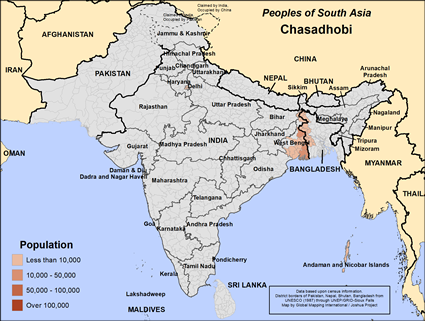
The Chasadhobi are a community found in India, especially in the eastern regions where caste identity, traditional occupations, and village life have shaped social structure for generations. Their name appears connected to agricultural and washing occupations, reflecting the way many caste communities in India historically became associated with hereditary forms of labor. The Chasadhobi speak regional Indo-Aryan languages common to the areas where they live and have developed their identity within the broader framework of Hindu society.
Historically, communities connected to washing, labor, and village service occupations often occupied lower positions within the caste hierarchy and experienced social marginalization. In many parts of India, caste distinctions affected marriage, employment, social interaction, and access to opportunity. While modern education and urbanization have changed some aspects of traditional life, caste identity still remains influential in many communities and family relationships.
Most Chasadhobi families live in rural or semi-urban settings where agriculture, wage labor, small business activity, and traditional service work help support daily life. Families often live in close community networks where relatives provide social and economic support during difficult times. Rice, lentils, vegetables, and locally available grains form the basis of everyday meals.
Community life is strongly centered around family responsibilities, festivals, marriages, and religious observances. Respect for elders and maintaining family honor are important values. Weddings and community gatherings often involve extended relatives and reinforce social ties that have existed for generations.
Economic advancement can be difficult for many families. Limited educational opportunities, unstable employment, and lingering social barriers connected to caste status may affect long-term progress. Younger generations increasingly migrate to cities seeking work, education, and improved living conditions, though this can also weaken traditional family structures and cultural continuity.
The Chasadhobi primarily follow Hinduism and participate in the religious customs common throughout their region. Hindu worship may include devotion to various gods and goddesses, temple rituals, seasonal festivals, offerings, and household religious practices.
Alongside formal Hindu beliefs, many people may also practice folk religion and traditional spiritual customs tied to local deities, ancestral influences, blessings, curses, and protection from harmful spirits. In many communities across India, these practices become deeply woven into everyday life and family tradition.
Where exposure to Christianity has occurred, believers may still face pressure from family expectations, caste identity, and older religious customs. Strong biblical discipleship is needed so that faith in Christ is grounded firmly in Scripture rather than mixed with traditional religious practices.
The Chasadhobi need clear access to the gospel through faithful Christian witness, Scripture, and mature discipleship. Many have little understanding of salvation by grace through Jesus Christ alone and need opportunities to hear biblical truth in culturally understandable ways.
Practical needs are also significant. Many families face economic uncertainty, limited educational opportunities, and social pressures connected to caste identity. Rural communities may struggle with healthcare access, poor infrastructure, and unstable employment opportunities.
Believers among the Chasadhobi need encouragement, biblical leadership training, and support to grow into strong local churches that can reach both their own people and neighboring communities with the gospel.
Pray that the Chasadhobi people would hear the gospel clearly and come to personal faith in Jesus Christ as Lord and Savior.
Pray that Christians serving among the Chasadhobi would have wisdom, compassion, and boldness as they share biblical truth and disciple new believers.
Pray that the Chasadhobi would be adopted through the People Group Adoption program so that sustained prayer, long-term ministry, and future gospel engagement would continue among them.
Pray that believers among the Chasadhobi would grow strong in Scripture, resist syncretism and social pressure, and become effective witnesses to surrounding communities.
Scripture Prayers for the Chasadhobi in India.
https://peoplegroups.org/explore/GroupDetails.aspx?peid=42063
https://www.britannica.com/place/India/Caste
https://www.ethnologue.com/
https://en.wikipedia.org/wiki/Dhobi
https://ebooks.inflibnet.ac.in/socp12/chapter/caste-amongst-other-religious-communities-in-india/
| Profile Source: Joshua Project |



