




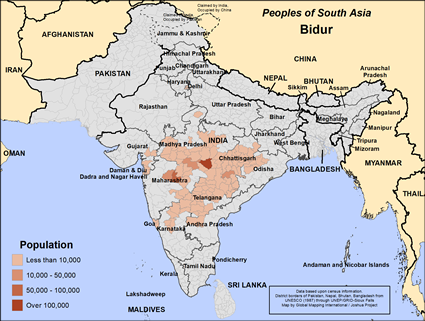
The Bidur are a community found in India whose identity has developed within the broader cultural and social framework of the Indian subcontinent. Historical information about the Bidur is limited, and much of their heritage has been preserved through family traditions, oral history, and local community life rather than extensive written records. Like many smaller communities in India, they have traditionally lived in close-knit social structures shaped by regional customs, occupation, and religious practice.
Over generations, the Bidur have adapted to changing economic and social conditions while maintaining important aspects of their cultural identity. Migration, modernization, and increasing contact with urban society have gradually influenced younger generations, though traditional family relationships and community expectations still remain significant in many areas.
Most Bidur families live in rural or semi-rural settings where agriculture, labor, small trade, and local occupations form the basis of daily life. Families often depend heavily on seasonal work and local economic conditions. Rice, lentils, vegetables, and locally available grains commonly make up everyday meals.
Community and family ties are central within Bidur society. Respect for elders, care for relatives, and participation in weddings, festivals, and community gatherings remain important social values. Extended family members frequently assist one another during financial hardship, illness, or important life events.
In many areas, practical challenges such as limited healthcare, inconsistent education, poverty, and unstable employment opportunities can affect long-term stability. Younger generations may move to towns or cities seeking work, creating tension between preserving traditional ways of life and adapting to modern economic realities.
The Bidur are generally influenced by the religious traditions common to their surrounding region, most often forms of Hindu belief and practice. Religious life may include devotion to local deities, participation in festivals, household rituals, and customs tied closely to family heritage and community identity.
Alongside formal religious observances, folk beliefs and animistic practices may also influence daily life. Concerns about spiritual forces, blessings, curses, protection rituals, astrology, and ancestral customs can remain deeply rooted within the culture. These beliefs often create spiritual fear and confusion concerning the biblical message of salvation through Jesus Christ alone.
Where there has been some exposure to Christianity, believers may still require strong biblical teaching and discipleship to help them separate biblical truth from older religious traditions and syncretistic practices.
The Bidur need greater access to the gospel through faithful Christian witness, Scripture, and discipleship grounded clearly in the Word of God. Many have little understanding of the gospel message and need opportunities to hear about Jesus Christ in culturally understandable ways.
Practical needs are also significant in many Bidur communities. Families may struggle with poverty, healthcare limitations, educational barriers, and uncertain economic opportunities. Rural isolation and limited infrastructure can make access to outside assistance more difficult.
Believers among the Bidur need encouragement, trained leadership, and spiritually healthy local churches that can disciple future generations and share the gospel with surrounding communities. Compassionate ministry that addresses both spiritual and practical concerns can help build trust and open doors for long-term gospel engagement.
Pray that the Bidur people would hear the gospel clearly and respond with repentance and faith in Jesus Christ.
Pray that Christian workers serving among the Bidur would have wisdom, endurance, and opportunities to form meaningful relationships within their communities.
Pray that the Bidur would be adopted through the People Group Adoption program so that sustained prayer, discipleship, and future gospel outreach would continue among them.
Pray that believers among the Bidur would grow in biblical maturity, reject syncretistic practices, and become faithful witnesses to neighboring communities.
Scripture Prayers for the Bidur in India.
https://peoplegroups.org/explore/GroupDetails.aspx?peid=41941
https://www.ethnologue.com/
https://www.britannica.com/topic/Hinduism
https://india.gov.in/
| Profile Source: Joshua Project |



