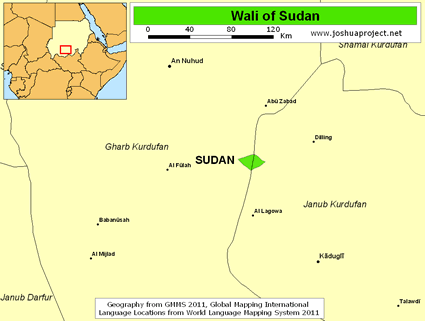

The Wali are a small Nuba people group living in the Nuba Mountains of South Kordofan State in Sudan. Most Wali communities are concentrated in a few villages located northeast of the Katla region. They are part of the wider Nuba cultural world, a collection of many distinct ethnic groups that historically sought refuge in the mountains to escape outside domination, slave raids, and political pressure over centuries of Sudanese history.
The Wali speak the Wali language, also called Walari or Walarishe, a Hill Nubian language belonging to the Nilo-Saharan language family. Although many also speak Sudanese Arabic for trade and interaction with neighboring peoples, the Wali language remains active within the community and is still spoken by children in many villages.
Like many peoples of the Nuba Mountains, the Wali have experienced long periods of isolation due to rugged terrain and limited infrastructure. Regional instability, civil conflict, and economic hardship across Sudan have also affected their communities. Despite these pressures, they continue to preserve strong family relationships, agricultural traditions, and a distinct cultural identity rooted in village life and the mountain environment.
The Wali are primarily subsistence farmers and livestock keepers. Families grow crops such as sorghum, sesame, peanuts, and vegetables suited to the dry climate of South Kordofan. They also raise cattle, sheep, and goats for milk, meat, and economic support. Farming and livestock care shape much of daily life, and seasonal rainfall strongly affects food supply and household stability.
Village life among the Wali revolves around extended family networks and community cooperation. Homes are generally built from mud brick and local materials suited to the hot climate and mountainous terrain. Men, women, and children often work together in farming, gathering water, caring for animals, and maintaining family property. Community gatherings, weddings, harvest seasons, and religious festivals remain important parts of social life.
Life in the Nuba Mountains can be physically demanding. Many villages have limited access to paved roads, modern healthcare, electricity, and quality schools. Economic opportunities are scarce, and families often depend heavily on agriculture and livestock for survival. Regional conflict in Sudan has also contributed to insecurity and disrupted access to services throughout South Kordofan.
The Wali are primarily Sunni Muslims, and Islam shapes much of their moral and social life. Religious practices commonly include prayer, fasting during Ramadan, mosque participation, and observance of Islamic customs connected to marriage, burial, and family life. Islam spread gradually into the Nuba Mountains through trade, migration, and interaction with surrounding Muslim peoples over many centuries.
Among many Nuba peoples, older traditional spiritual beliefs may continue alongside formal Islamic identity. Fear of spirits, curses, evil influences, or unseen supernatural powers can still affect daily thinking and community practices. Folk beliefs connected to protection, healing, or blessings may exist alongside Islamic worship, creating a syncretistic spiritual environment in some communities.
Most Wali have had little opportunity to hear a clear biblical explanation of salvation through Jesus Christ. They need to know that forgiveness of sins and reconciliation with God come through Christ alone rather than through religious identity, rituals, or human effort.
The Wali remain largely unreached with the gospel, and there are few known Christian resources focused specifically on their language and culture. Their remote mountain location, small population, and limited infrastructure make long-term ministry difficult. Faithful Christian workers are needed who are willing to build relationships, learn their culture, and communicate biblical truth with humility and perseverance.
Practical needs are also significant. Community leaders have reportedly expressed the need for improved schools, healthcare facilities, and better water access in Wali villages. Limited medical care, educational opportunity, transportation, and economic development continue to affect many families in the region.
The Wali need Scripture resources, discipleship materials, and gospel teaching in forms they can clearly understand. Any believers among them would need encouragement, fellowship, and biblical training because of isolation and social pressure. Compassionate ministry that addresses both spiritual and practical needs can help demonstrate the love of Christ in meaningful and lasting ways.
Pray that the Wali people will hear a clear presentation of the gospel and place their faith in Jesus Christ for salvation.
Pray that God will raise up faithful Christian workers who are willing to serve among the Wali with wisdom, compassion, and perseverance in the Nuba Mountains.
Pray that the Wali people will be adopted through the People Group Adoption program so that churches and believers will commit to sustained prayer and future gospel outreach among them.
Pray that any believers among the Wali will grow strong in biblical truth and boldly share the hope of Christ with their families and neighboring communities.
Scripture Prayers for the Wali in Sudan.
https://peoplegroups.org/people_groups/pg012169/
https://en.wikipedia.org/wiki/Wali_language_(Sudan)
https://en.wikipedia.org/wiki/Sudan
https://www.ethnologue.com/language/wll/
https://johnryle.com/?article=peoples-and-cultures-of-two-sudans
| Profile Source: Joshua Project |