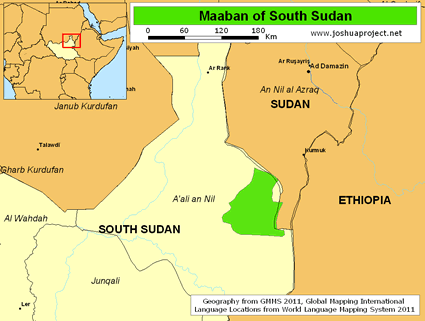

Although more than a quarter of the surrounding groups are Christian, some of the smaller groups, including the Maaban, remain unreached. Their original homeland is believed to be somewhere east of the African Great Lakes. As both the population and the sizes of their herds increased, they migrated northward, reaching their present territory in the late fifteenth century. Today, they live near the Yabus river.
Throughout the nineteenth century the the region was raided for slaves and ivory. Although slave stations were established in many areas, they were well organized and able to deter the raiders. During the early twentieth century, their way of life was greatly affected. Medical services, irrigation, modern roads, and the introduction of a European style government, all led to changes in their culture.
Maaban communities can be likened to beads on a string, because they are spread out along the banks of the White Nile River about 200 yards apart. Several thatch-roofed mud huts make up one settlement. Each settlement represents one family's lineage and is headed by a chief. The chief settles disputes and maintains order in his settlement.
At the center of their territory is the capital, Buny.
The Maaban make their living by raising small herds of cattle, along with sheep, goats, pigs and hens. The cattle are given the utmost care because they are so important to the survival of the tribes. The cattle are even tied near fires at night to keep insects from biting them.
The Maaban must plant crops in gardens outside the villages in order to maintain an adequate diet. Milk supplies are often insufficient, since cattle diseases have taken a toll on their herds. Millet, maize, sesame, beans, and tobacco are raised. The men also hunt hippopotamuses, antelope, buffalo, and giraffes. Spear fishing is another important means of obtaining food and the Maaban are known as expert fishermen. While the men hunt and fish, the women tend the gardens, prepare the food, and make the cooking utensils.
The clothing and tribal markings worn by the Maaban clearly set them apart from neighboring groups. Neither the men nor the women wear much clothing, but they wear beads. Some of the lower teeth are removed from the Maaban while they are very young, unless they are in the royal family. They have tribal marks on their cheeks, arms and other parts of the body.
The Maaban follow their traditional ethnic beliefs. They worship a deity named Juang or Jwanga Tolan.
The Maaban also believe in the power of the evil eye. Envy or anger may cause a person with the evil eye to bring misfortune upon others. They use prayer, sacrifices, and magic in an attempt to safeguard themselves from this power.
While many African tribes believe that the birth of twins is a curse, the Maaban consider it to be a blessing. In fact, twins are considered to be "children of god."
Few Christian resources are available in the Maaban language. Added laborers and materials are greatly needed.
Ask God to grant wisdom and favor to missions agencies focusing on the Maaban.
Pray that the Lord will raise up long term workers to join the few who have already responded.
Ask God to begin using the Maaban Christians to reach out and share the Gospel with their own people.
Ask God to raise up prayer teams that will begin breaking up the soil through intercession.
Ask the Lord to raise up strong local churches among the Maaban.
Scripture Prayers for the Maaban in South Sudan.
| Profile Source: Bethany World Prayer Center |