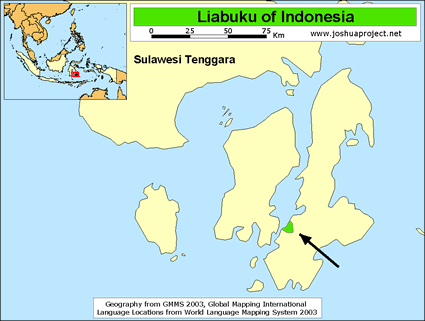
The Liabuku people are a small ethnic community living in southeastern Indonesia, particularly on Buton Island in Southeast Sulawesi Province. They are closely associated with the wider Butonese cultural world, which has been shaped by centuries of maritime trade, Islamic influence, and interaction with neighboring island peoples. The Liabuku are named after the district and region where many of them live today.
Historically, Buton Island occupied an important position along trading routes that connected Sulawesi, the Moluccas, Java, and other islands of eastern Indonesia. The Sultanate of Buton became a significant regional power and maintained influence over many surrounding communities for centuries. Through trade and political ties, Islam spread widely throughout the region beginning around the sixteenth century.
Although connected to the larger Butonese culture, smaller groups such as the Liabuku preserved local customs, dialects, and village traditions. Fishing, farming, and seafaring became central features of daily life. Over generations, the Liabuku adapted to life on a rugged island landscape where communities were often separated by hills, forests, and coastal inlets.
Modern Indonesia has brought increasing change through education, migration, technology, and national integration. Younger generations now encounter broader Indonesian culture through schools, media, and urban employment opportunities. Even so, village identity, family relationships, and traditional customs continue to shape much of Liabuku community life.
Most Liabuku families live in rural villages where agriculture and fishing remain important sources of livelihood. Rice, cassava, corn, coconuts, and vegetables are commonly cultivated, while coastal communities may also depend heavily on fishing and small-scale marine trade. Families often combine several forms of work to meet their daily needs.
Buton Island's tropical climate supports farming, but life can still be economically difficult in rural areas. Some younger people leave for larger Indonesian cities seeking education or employment, while others continue traditional occupations connected to farming or the sea.
Liabuku villages are typically close-knit communities where extended family relationships are highly valued. Respect for elders and cooperation among neighbors remain important cultural traits. Weddings, funerals, harvest celebrations, and religious festivals often involve the entire community and reinforce social bonds.
Traditional houses in the region have historically been built from wood and local materials, though modern construction methods are increasingly common. Oral storytelling, music, and ceremonial traditions continue to preserve cultural identity even as modernization spreads.
Education and healthcare access have improved in many parts of Indonesia, but smaller rural communities may still face economic limitations and fewer opportunities than urban populations. Infrastructure varies widely depending on location and proximity to larger towns.
The Liabuku are primarily Muslim, following the Sunni branch of Islam that dominates most of Indonesia. Islamic belief and practice strongly shape community life, family customs, holidays, and moral values. Mosques serve not only as places of worship but also as centers of community gathering and instruction.
Islam first spread to Buton Island through traders, teachers, and political leaders connected to regional Islamic kingdoms. Over time, Islamic identity became deeply integrated into local culture. Religious observances such as Ramadan, daily prayers, and Islamic festivals remain important aspects of Liabuku life.
At the same time, traditional spiritual beliefs may still influence some families and communities. In many parts of Indonesia, older animistic ideas concerning spirits, sacred places, or ancestral influences continue alongside formal Islamic practice. Folk traditions and local customs can remain deeply rooted even within strongly Muslim societies.
There are very few known Christians among the Liabuku. Many have never encountered a clear presentation of the gospel or had meaningful contact with biblical Christianity. In strongly Muslim communities, converting to Christianity can bring family tension, social pressure, or community rejection because religious identity is closely tied to family and ethnic identity.
The Liabuku need greater access to the gospel through respectful and culturally sensitive ministry. Because Islam is deeply woven into community identity, effective outreach requires patience, humility, long-term relationships, and a strong understanding of local culture.
Scripture resources, discipleship materials, and testimonies in understandable local languages are important for helping people engage with biblical truth clearly. Relationship-based evangelism and acts of compassion are often especially meaningful in Muslim contexts where trust develops slowly over time.
There is also a need for strong local believers and mature Christian leaders who can disciple future followers of Christ within their own cultural setting. New believers may face isolation or pressure from relatives and neighbors, making fellowship and encouragement essential.
Practical needs remain important as well. Rural communities benefit from improved educational opportunities, healthcare services, economic development, and vocational training. Ministries that combine compassionate service with faithful gospel witness can demonstrate Christ's love in tangible ways.
Pray that the Liabuku people will encounter the gospel through loving and respectful Christian witness.
Ask God to reveal Jesus Christ clearly to Liabuku families through Scripture, conversations, dreams, and personal relationships.
Pray for the Liabuku people to be adopted through the People Group Adoption Program so churches and ministries will commit to sustained prayer and outreach.
Pray for improved education, healthcare, economic opportunity, and family stability within Liabuku communities.
Ask the Lord to raise up local Christian leaders who can disciple future Liabuku believers faithfully.
Pray for the development of Scripture resources and discipleship materials accessible to the Liabuku people.
Ask God to soften hearts and reduce opposition toward those who choose to follow Christ.
Scripture Prayers for the Liabuku in Indonesia.
Ethnologue
Encyclopaedia Britannica – Sulawesi
Encyclopaedia Britannica – Buton Island
PeopleGroups.org
Asia Harvest
| Profile Source: Joshua Project |